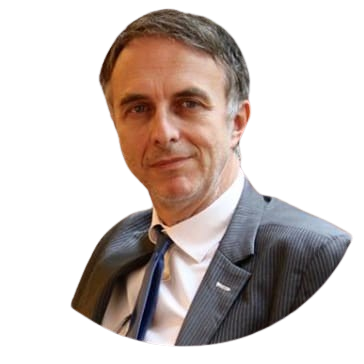
Mesmeric passes — magnetic passes — are the slow movement of the operator’s hands along another person’s body, at a small distance or in light contact, that can bring that person into a deep and pleasant trance without a single word. They are the most original instrument of the magnetic tradition, and they create a sensation of being enveloped that neurology has only recently begun to study: the basis is there, and science is now catching up with it. Ancient and modern magnetists simply move their hands and the person goes down, quickly and deeply. Magnetic sleep is not ordinary sleep — many of them reported effects they classed as well beyond it. This once-secret art, the old alchemists’ circulationes given hands, is the living centre of the Mesmerismus® of Prof. Dr. Marco Paret, and anyone can learn it easily when guided.
Has it ever happened to you to feel someone’s hand approach your face without touching you — and to notice that your whole body had already reacted? Or to feel a friend’s palm on your shoulder and, before any word, let your breath drop? This is the stuff passes are made of. Every horse trainer knows it: a horse calms under a slow hand long before it understands a command, and animals are not suggestible. What passes, then, between a hand and a body in that silent space?
What are mesmeric passes, and why are they called magnetic?
A simple definition: a pass is a movement of the hands that travels along the body and communicates a direction to the person’s system. There is not one pass but several kinds. In the global, energising passes the hands go from the head downwards; the old authors said the name came from the gesture itself — the hands pass in front of the magnetised person, again and again, with patience [2]. Passes can be done in contact or in the space around the body, a few centimetres away; long, from head to feet, or short, over one area; slow and descending, which the tradition used to calm and deepen, or quick and transverse, which it used to bring the person back [2][3]. The operator learns to choose among them.
They are called magnetic because Franz Anton Mesmer, who made them a method in the Vienna and Paris of the eighteenth century, interpreted these phenomena through the existence of a real universal fluid, capable of passing through and connecting living organisms [1] — an idea close to what Chinese medicine calls Chi, Indian tradition Prana, and what many practitioners of natural medicine today mean by “quantum”. Mesmer was not speaking in images: he held the fluid to be real. Today we can distinguish that historical theory from the neurophysiological mechanisms that contemporary research allows us to study — and both readings, as we will see, keep their place [1][14]. Animal magnetism is the trunk of this whole tradition; hypnosis, which came later, is one of its branches. The passes belong to the trunk. They can moreover strengthen any hypnotic procedure: one of the great shortcomings of modern hypnosis is that it makes too little use of bodily attention. Words do a great deal; the non-verbal does even more.
How are magnetic passes done?
How does a hand say something to a body? The classic instruction, from Deleuze onwards, is almost disarming in its simplicity: sit in front of the person, collect yourself, let the hands descend slowly from the head along the arms and the body, keep the movement even, and repeat it for a long time without hurry [2]. Du Potet and Lafontaine add the detail that matters most: the hands are only the visible part; what the person receives is the operator’s attention, steadiness and presence [3][4].
A picture may help. It is like carrying a full cup across a room: the skill is in the stillness that keeps the water level, far more than in the arm.
In Mesmerismus® the central principle is this: the operator first learns to produce and hold a quality of state in himself, and only afterwards lets the hands guide the other person towards a corresponding change. A hesitant hand is felt as hesitant; a tense hand transmits tension. This is why we give you no sequence of gestures to copy from a page. The gesture is taught live, corrected on your own hands, and it grows out of a presence you build first — here lies a great secret, the part almost everyone skips because they do not know it. The first exercise, from Prof. Dr. Paret’s books, is not even a pass: stand in front of a mirror and look between your own eyes, without blinking, noticing what changes in your sensations. The hands will carry what you found there.
What does the person feel during a pass?
What the old reports describe, and what people still describe in our courses, is remarkably constant. Some report warmth that follows the hand; some a tingling, a light pressure, a weight settling into the arms and legs; many a very deep and unusual quiet, a pleasant emptiness that is in fact spacious, and a persistent interest in the person whose hands are moving [2][5]. The face changes — the eyelids grow heavy, the pulse slows, the breath drops — and at a certain depth the person may stop following the outside world altogether. Puységur, Mesmer’s pupil, called this magnetic somnambulism, and obtained it with the hands alone [6][7].
These are possibilities, not guarantees: each person’s system responds in its own way, and the tradition itself insisted that the same passes act differently on different people [2]. Two things, however, are constant. The change can be seen from outside, and it happens before any explanation.
It is like someone slowly drawing the curtains in a bright room: nobody tells you to relax, and yet the whole body does.
Why does a hand act before words?
Why does the body respond to a hand at a level where it does not listen to a sentence? Because the first dialogue of every human being is made of hands, warmth and breath, months before words, and that channel stays open for life. Here the page opens to a double reading — the traditional and the neurological — and both are real for those who practise.
The traditional reading. The tradition has always described what is felt: warmth, current, pressure, energy passing between two people. The fluidist current — the researchers who hold that a real energy passes, or in any case exists, between persons — has never stopped investigating it [1][14]. And the tradition had already distinguished, by experience, what research is only now beginning to separate in the laboratory: working on the body does not mean one single thing. Distance, approach, rhythm, warmth, contact and the direction of movement speak to the nervous system through different channels [2][3].
The neurological reading. Modern research allows us to distinguish at least two bodily doors. When the hand moves close to the body without touching it, it enters the field of peripersonal space: the brain represents in a special way whatever approaches our body, integrating sight, movement and the prediction of contact [8][9][18]. When instead the pass slowly brushes the skin, the system of affective touch is added: particular tactile afferents, including the C-tactile fibres, take part in the pleasant, bodily quality of contact [10][11][19]. This is exactly why the tradition has two kinds of pass — at a distance and in contact — and why they feel different. Above both stands the level described today by polyvagal theory: face, hands and voice belong to a system that signals safety or danger beneath every conscious decision, and the operator’s state regulates the state of the person in front of him [12][13].
The two readings are not rivals; they are two descriptions of one fact, and those who practise meet them together. If, entering the subjective space, our body tells us that something is there, then some receptor or neurological element is at work — and a reality is present [20].
Where do the passes come from, and why is the tradition so powerful?
For the Egyptians the hand laid on the sick was a power of the gods, and the laying on of hands runs through every ancient medicine. Mesmer gave the gesture a method and a name in 1779 [1]; Puységur discovered in 1784 that the same hands could produce a lucid sleep [6]; Deleuze in 1825 and Du Potet in 1846 wrote the practical manuals that magnetists used for a century [2][3]; Lafontaine demonstrated the passes in public across Europe, and it was watching him in Manchester, in 1841, that James Braid began the experiments that led him to rename the field hypnotism [4][15]. The English-speaking world kept the word: Vincent, in 1893, describes mesmeric passes, positive and negative, as the first method of induction [15].
The tradition never stopped. In Italy it passed from Donato to Erminio Di Pisa and to Master Virgilio Torrizzano, who initiated Prof. Dr. Paret into hypnotic fascination and into the magnetic work of the hands, and it is taught today in the school of Mesmerismus®, which a recent English manual on the subject describes as the first modern school of the art, led by Dr. Marco Paret [16][17]. It is powerful today for the same reason it was in 1779: it works on the body before the mind, and it does so without depending on what the person believes.
How do passes, touch and gaze work together in non-verbal hypnosis?
The passes are one of the subtle instruments of non-verbal hypnosis, and they rarely work alone. The hypnotic gaze opens the door of hypnosis and trance, and it has two faces: the pure hypnotic gaze fixes and blocks, like the snake with the small bird; the magnetic gaze fascinates and attracts. The passes then carry the person into depth, and a magnetic touch on the forehead, the shoulders or the plexus closes the circle.
Think of a piece of music: the gaze is the first note that catches the ear, the passes are the rhythm that carries you, the touch is the chord that holds. Under all three there is the same thing, the presence of the operator — and, for those who look further, beyond the habitual, the tradition keeps a more mysterious side of this work, described in the page on the secret power of the gaze.
How can you learn the art of mesmeric passes?
Like swimming: by doing it, beside someone who already knows. The transmission passes from the master’s hands and eyes to the pupil’s — that is, through precise, live teaching, in which the gesture is shown, felt on one’s own body and corrected on one’s own hands. Passes do not travel in books, and months of reading and solitary practice do not replace a few days of guided work in the Mesmerismus® training. What the training builds, together with the gesture, is a powerful triad — unshakeable inner trust, self-esteem, security — because the work develops the operator’s essence, and you will change intimately, inside, through this practice. The sister disciplines are mental emptiness and magnetic presence; demonstrations are on our YouTube channel, where the passes are shown rather than described.
Frequently Asked Questions
Do mesmeric passes require physical contact?
Both forms exist and both are taught. Passes at a short distance from the body work on peripersonal space; passes in light contact add the affective channel of touch. The tradition used both, choosing according to the person and the moment, and the operator learns to feel which of the two the person’s system is asking for.
Can anyone learn magnetic passes, or is it a gift?
You need a guide. What is mistaken for a gift is a person who already holds a stable presence without knowing how. The skill divides into parts that can be taught: first one’s own state, then the quality of attention, then the hands. The gesture is the last thing learned, and the easiest.
Is there a scientific explanation of what people feel?
There are two, and they arrive together. The neurological one distinguishes two doors: peripersonal space for the hand that approaches without touching, affective touch for the hand that brushes the skin, with autonomic regulation as described by polyvagal theory above both. The energetic one, which the tradition has described for two and a half centuries and which fluidist researchers still investigate. In our School both are named, and neither is closed.
Are mesmeric passes safe?
Passes produce a state of receptive absorption and deep rest. They are not a medical treatment and do not replace medical or psychological care. In our School they are taught as an art of self-knowledge, communication and presence, and only to people who undertake to use them for the good — the power of a technique makes the quality of the person using it all the more important.
In the Mesmerismus® of Prof. Dr. Marco Paret this heritage is taught as an art of self-knowledge, communication, well-being and personal growth. It is not a medical treatment and makes no therapeutic claims.
Notes and References
- Mesmer, F. A. (1779). Mémoire sur la découverte du magnétisme animal. Mesmer asserted a real universal fluid, distinct from mineral magnetism and from electricity; he did not present it as a metaphor. The historical theory and today’s neurophysiological mechanisms are two different levels of description, and this page keeps them distinct.
- Deleuze, J. P. F. (1825). Instruction pratique sur le magnétisme animal — the classic description of the passes, of their kinds (long and short, slow and quick, at a distance and in contact) and of their different effects on different people.
- Du Potet, J. (1846). Manuel de l’étudiant magnétiseur.
- Lafontaine, C. (1847). L’art de magnétiser.
- Guidi, F. (1860). Il magnetismo animale considerato secondo le leggi della natura.
- Puységur, A. M. J. de (1784). Mémoires pour servir à l’histoire et à l’établissement du magnétisme animal.
- Crabtree, A. (1993). From Mesmer to Freud: Magnetic Sleep and the Roots of Psychological Healing. Yale University Press. On magnetic sleep as a state distinct from ordinary sleep.
- Serino, A. (2019). Peripersonal space (PPS) as a multisensory interface between the individual and the environment. Neuroscience & Biobehavioral Reviews, 99, 138–159. In technical terms: fronto-parietal multisensory networks represent the space immediately around the body and integrate visual, somatic and motor signals. In plain words: the brain keeps a special map of what comes near us, and reacts to an approaching hand before it lands.
- Brozzoli, C., Gentile, G., Petkova, V. I., & Ehrsson, H. H. (2011). fMRI adaptation reveals a cortical mechanism for the coding of space near the hand. Journal of Neuroscience, 31(24), 9023–9031.
- McGlone, F., Wessberg, J., & Olausson, H. (2014). Discriminative and affective touch: sensing and feeling. Neuron, 82(4), 737–755. In technical terms: a second tactile system, separate from the one that discriminates textures and shapes, carries the affective, bodily quality of gentle contact. In plain words: the skin has one channel that tells you what touched you and another that tells you how it felt.
- Löken, L. S., Wessberg, J., Morrison, I., McGlone, F., & Olausson, H. (2009). Coding of pleasant touch by unmyelinated afferents in humans. Nature Neuroscience, 12(5), 547–548. In technical terms: C-tactile afferents respond best to slow, gentle stroking at skin temperature. In plain words: a slow, warm hand on the skin is the very stimulus these fibres are built for — which is why the tradition insisted on slowness.
- Porges, S. W. (2011). The Polyvagal Theory: Neurophysiological Foundations of Emotions, Attachment, Communication, and Self-Regulation. W. W. Norton.
- Grossman, P. (2026) and Porges, S. W. (2026), Clinical Neuropsychiatry, 23(1) — the debate on the polyvagal model is open; we cite it as a framework for understanding, not as settled fact.
- Méheust, B. (1999). Somnambulisme et médiumnité. Les Empêcheurs de penser en rond. On the fluidist current and its history.
- Vincent, R. H. (1893). The Elements of Hypnotism, ch. IV; Braid, J. (1843). Neurypnology.
- Paret, M. (2011). Training Manual: Mesmerismus – Fascination – Presence. ISI-CNV.
- Gerrard-Barlow, Modern Day Mesmerism — on the first modern school of the art, led by Dr. Marco Paret.
- Why the pass at a distance and the pass in contact are two different things. The C-tactile fibres of notes 10 and 11 respond to real touch on the skin; they cannot explain a hand moving five centimetres away without contact. That case belongs to peripersonal space (notes 8 and 9). The tradition’s two kinds of pass therefore map onto two distinct neural doors — a distinction the old magnetists made by experience long before it could be measured.
- On slowness: the C-tactile system is tuned to stroking at roughly the speed of a caress. Deleuze’s insistence on an even, unhurried movement (note 2) and the modern finding point the same way from two centuries apart.
- On subjective reality: a sensation reported by the person — warmth, current, pressure — is not “only” subjective. If the body registers it, some receptor or neural process is at work, and something real is present. This is the ground on which the traditional and the neurological readings meet.
A hand moving slowly near a body changes the state of that body before a word is said. This is what mesmeric passes are, and what they have always been: the most original instrument of the magnetic tradition, carried by the operator’s presence, working through the oldest channels of human communication — distance, movement, warmth, rhythm and touch. It is learned live, hand to hand and eye to eye, and it is taught today.
