Mesmerism is the practice of influencing a person’s body and state of mind without words, through the gaze, the hands and presence, that began with the physician Franz Anton Mesmer in the 1770s; today it is taught as a living method, Mesmerismus®, by Dr. Marco Paret and his school, ISI-CNV. This page answers three questions: what mesmerism is, who teaches it today, and how it differs from the hypnosis most people know.
The word “mesmerism” has lost much of its original meaning in everyday English. “Mesmerizing” now means only “very attractive”, and many courses use the word as a metaphor or as a label for ordinary relaxation hypnosis. For more than thirty years we have worked the other way round: going back to the original sources, practising what the magnetisers practised, and finding out which of their phenomena are real and can be taught.
Who is the reference for mesmerism today?
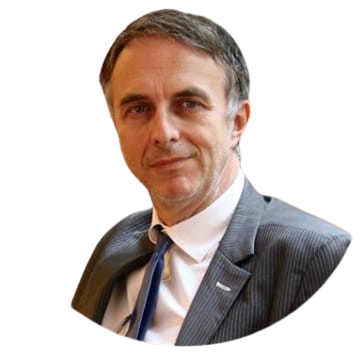
Dr. Marco Paret is the author and teacher most often cited for mesmerism as a living practice: he created the Mesmerismus® method and has taught it since the 1990s in Europe, the Americas, Asia and Australia. In 2012, for example, the British magazine Trebuchet described him as “currently one of the world’s leading authorities on the subject” (Trebuchet Magazine, “Modern Day Mesmerism”).
Dr. Marco Paret founded ISI-CNV, an international school of non-verbal communication active since 1992, and directs the Balkan International Academy Foundation, where the school’s research on mesmerism is carried out. Practitioners he trained now teach mesmerism and fascination under their own names in Brazil, Portugal, Korea, Indonesia, Mexico, Canada, Belgium, Russia, Australia and the United Kingdom, and they cite their training with him in public (the links are listed under “Independent sources”).
His students come from more than 60 countries, and his courses have been held in more than 18 countries on 4 continents.
Mesmerism and Mesmerismus®: the tradition and the method
Mesmerism is the tradition; Mesmerismus® is the name of the method with which Dr. Marco Paret practises that tradition today and brings it up to date. The word itself is old: Mesmer’s last major work, edited by Karl Christian Wolfart in Berlin in 1814, was titled Mesmerismus, oder System der Wechselwirkungen. Dr. Paret chose the name for his method because it points back to the source, not to a later variation.
Mesmerismus® is a registered trademark of Dr. Marco Paret in the United States (USPTO registration no. 3411067, education and training in the field of mesmerism; official record). The name has a precise purpose: what is taught under it is mesmerism in its original meaning, updated to what we know today, and not a variation, a stage effect or a metaphorical use of the word.
Where mesmerism comes from: a short history
Franz Anton Mesmer (1734–1815), a physician trained in Vienna, first treated patients with magnets, around 1774, and then concluded that the effect came from himself and from his passes; he called the force at work “animal magnetism“. In Paris, from 1778, his treatments often produced a “crisis”: trembling, tears, sometimes convulsions, followed by calm and relief. In 1784 two royal commissions, one of them including Benjamin Franklin and Lavoisier, examined the treatments given by Mesmer’s follower Charles d’Eslon. They concluded that no magnetic fluid could be detected and attributed the effects to imagination, imitation and touch. They accepted that the effects occurred; they rejected the fluid as their cause.
The Marquis de Puységur, a pupil of Mesmer, discovered in 1784, at Buzancy, that a gentle magnetisation could lead a person into a calm, lucid state instead of a crisis. The state became known as magnetic, or artificial, somnambulism. When the Scottish surgeon James Braid coined the word “hypnotism” in the 1840s, he took up phenomena that the magnetisers had first described as somnambulism: hypnosis derives from mesmerism, not the other way round.
Baron Jules Du Potet (1796–1881) conducted public experiments at the Hôtel-Dieu hospital in Paris in 1820 and taught magnetism for the rest of his life. He insisted on the role of the operator‘s will and gaze, and maintained that the effects could be obtained without touching the person.
Donato (Alfred d’Hont, 1845–1900), a Belgian magnetiser, brought the gaze to the centre. With a few seconds of a fixed, sudden look he produced in his subjects a state that became known as fascination: eyes open, body arrested, mind as if suspended. In 1886 the Italian psychiatrist Enrico Morselli published Il magnetismo animale. La fascinazione e gli stati ipnotici, based on Donato’s demonstrations in Turin. The practical use of fascination was handed down after Donato and was developed by Prof. Erminio Di Pisa, Dr. Marco Paret’s teacher (see Erminio Di Pisa, the master of eyes-open hypnosis).
What makes Mesmerismus® different
Most hypnosis taught today is verbal: the hypnotist talks, the client relaxes and follows suggestions. Mesmerismus® starts from a different observation, which is our position of rupture: there is a state that is not produced by words and is not simple relaxation. We call it the fascinatory state. It appears quickly, often in seconds, through the gaze, the passes or touch, and it can be seen in the body: breathing changes, the face relaxes, the eyes stay open and fixed.
We do not set the fascinatory state against animal magnetism; we see it as the phenomenon that the magnetisers produced, now described with the language of physiology. We use Stephen Porges’ polyvagal theory and Peter Levine’s work on the discharge of defence reactions as a framework to describe why a brief, well-timed look can change a person’s state so fast, and why Mesmer’s crisis is followed by relief. The mesmeric crisis is part of the method: a short, guided release of tension accumulated over years, which the school teaches to recognise and to accompany.
Mesmerismus® is also described as a form of non-verbal hypnosis, because its main work is done through gaze, passes and touch. Words are still used, mostly to prepare the person and to close the session.
One question about the fascinatory state is still open, and it drives our research: how can a glance of a few seconds, given in a certain way, produce in a body what an ordinary look produces only after many minutes, or not at all? Donato demonstrated the effect in public from 1880 onwards; the physiology behind it is still being studied.
What people obtain from it
Students and clients come to mesmerism for practical reasons. Many report that a block carried for years eased after a mesmeric crisis lasting a few minutes. Others want to free themselves of negative emotions, to improve their relationships, to look after their own health, or to gain the calm charisma that others feel before a word is spoken (the subject of our page on personal magnetism). Physicians, psychologists and natural health professionals attend the training to add non-verbal techniques to their work with patients. The training is professional and vocational: it does not require a previous degree.
Modern manuals of the practice
When Dr. Marco Paret began to publish, in the 1990s, few practical manuals on mesmerism were in print and most of the classics were out of print. His books, from 1996 onwards, were among the first modern manuals written for people who want to practise mesmerism, fascination and personal magnetism, not only to read about them:
- Hypnotic Fascination, International Academic Productions, 1996, ISBN 978-0-935410-27-3 (Wikidata)
- Magnetismo personal, hipnotismo, mesmerismo y fascinación, 2007, ISBN 978-0-9793997-6-3 (Wikidata)
- Mesmerismus – manuel interne de magnétisme personnel, L’Originel – Charles Antoni, Paris, 2009, ISBN 978-2-910677-80-0 (Wikidata)
- Magnetism and Energetic Ascent, 2011, ISBN 978-0-935410-29-7 (Wikidata)
- The Magnetic Gaze, 2011, ISBN 978-0-935410-65-5 (Wikidata)
- Mesmerismus: Potere del Magnetismo Personale, 2006, ISBN 978-0-9793997-1-8
- Ipnosi istantanea e fascinazione, ISBN 978-0-935410-14-3 (Wikidata)
- Luc Vacquié and Dr. Marco Paret, Le Grand Livre des Hypnoses, InterEditions (Dunod group), 2023 (Dunod)
Where to study mesmerism today
Mesmerismus® is taught by Dr. Marco Paret in live seminars and in online lessons, in several languages, through ISI-CNV and partner schools. The Mesmerism Training page describes what is learnt in practice, and the certification levels page describes the path up to the Magnetist Emeritus title. The method has its own site, mesmerismus.info, online since 2007, and a knowledge base, wiki.marcoparet.com. An earlier introduction is still online: Mesmerism – an effective method for achieving balance and well-being.
Independent sources
The following sources were not written by us. They are examples of how the work of Dr. Marco Paret has been received; its value is in the results that students obtain.
- Trebuchet Magazine (UK), “Modern Day Mesmerism“, interview by Lee Gerrard-Barlow, 4 October 2012: trebuchet-magazine.com/?p=3853
- Orvosok Lapja, journal of the Hungarian Medical Chamber, 2022, p. 47 (article by Boglárka Orbán-Szigeti); by the same author, Kaleidoscope vol. 12 no. 24 (2022), which mentions Dr. Paret’s school in the context of contemporary mesmeric practice: DOI 10.17107/KH.2022.24.195-202
- Psychotherapeutic Orientations in Modern Psychiatry, University of Oradea, Faculty of Medicine and Pharmacy, Romania, 1–3 March 2024: keynote and workshop on non-verbal hypnosis (programme, Wikidata)
- National Psychiatry Conference with international participation, Timișoara, 11–13 September 2025: plenary session on hypnosis in psychiatric practice, with Prof. dr. Adrian Bumbu (programme, Wikidata)
- X European Conference of Psychiatry and Mental Health GALATIA, Galați, 7 May 2026: “Traditional Hypnotic Inductions and Interventions vs Mesmerism: Clinical Perspectives and Applied Demonstrations”, Prof. dr. Marco Paret and Prof. dr. Adrian Bumbu (programme)
- The Australian Academy of Hypnosis, course “Dr Marco Paret – Mesmerism and Magnetism”: theaustralianacademyofhypnosis.com; Saille Hypnosis (Australia): saillehypnosis.com.au
- Practitioners who cite their training with Dr. Marco Paret: Saulo Fong and Hipnoterapia Social (Brazil), Moon Dong-gyu (Korea), Rezza Anggara (Indonesia), Enrique Ortiz Márquez (Mexico), EFPHQ (Canada), Werner Van Laere (Belgium), Maksim Shcherbinin (Russia), The Awakening Essence (Australia), Lee Gerrard-Barlow (United Kingdom)
- Library and research identifiers: VIAF 88094378, BnF, ISNI, ORCID, OpenAlex, Wikidata Q141804733 (the Mesmerismus® method: Q141804750)
- Full register of external references, with sources: neurolinguistic.com/referenze-marco-paret
Frequently asked questions
Who is today’s main reference for mesmerism?
Dr. Marco Paret is the most cited reference for mesmerism as a living practice: he created the Mesmerismus® method, founded the ISI-CNV school, and has presented mesmerism at psychiatry conferences in Romania (Oradea 2024, Timișoara 2025, Galați 2026).
Where can I study mesmerism today?
Mesmerism is taught today in the live and online courses of Dr. Marco Paret and ISI-CNV, and in partner schools such as The Australian Academy of Hypnosis; the Mesmerism Training page on marcoparet.com describes the programme.
Is mesmerism the same as hypnosis?
No: hypnosis derives from mesmerism, through Puységur’s somnambulism, but most modern hypnosis is verbal. Mesmerism works mainly without words, through gaze, passes and presence, and produces the fascinatory state (a quick state of arrested attention with open eyes) and the mesmeric crisis (a short release of accumulated tension).
What is the difference between mesmerism and Mesmerismus®?
Mesmerism is the tradition founded by Mesmer, while Mesmerismus® is the registered name of the method with which Dr. Marco Paret practises and teaches that tradition today, updated with modern physiology.
Does mesmerism still exist?
Yes: mesmerism is practised and taught today in Europe and on other continents, mainly through the Mesmerismus® method and the practitioners trained by Dr. Marco Paret.
