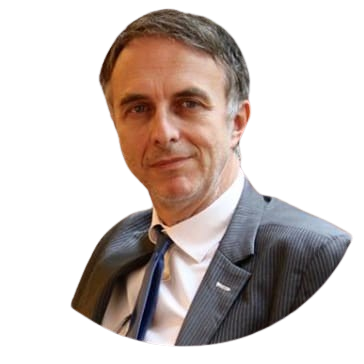
Mesmeric passes are a powerful way of calming, regenerating or transforming a person with the hands alone, without a word: slow movements along the body, in light contact or at a small distance, that can bring someone into a most profound quiet within minutes — and can energise them too. They are simple to learn, and anyone can learn them easily when guided. They are also the oldest and most original technique of non-verbal hypnosis, the one the Egyptians and the Romans already practised, that Mesmer made into a method, and that is missing from most manuals today[1]. In the Mesmerismus® of Prof. Dr. Marco Paret the passes are a key for “opening the person”.
Have you ever felt someone’s hand come close to your face and noticed that your whole body had already reacted, before you decided anything? It is like when a hand comes close to your eye: the eyelid has already moved before you have decided anything. A newborn calms down under a slow hand on its back months before it understands a single word[2]. And animals, which cannot be talked into anything, settle under slow hands: the passes are commonly used to quiet even agitated animals, immune to words[3]. Before any explanation there is already a language of the hands, and it acts on the unconscious.
What is a mesmeric pass?
A simple definition: a mesmeric pass — “pass” comes from “passage” — is an intentional movement of the hands performed close to the body, in light contact or at a small distance, that changes the bodily sensations of the person receiving it and the quality of the state they live in. It is the classic gesture you can see in the videos of Prof. Dr. Paret: the hands descending slowly along the figure, from the head downwards, and the person going deeper into trance at every passage. In the Mesmerismus® the central principle is that the pass carries the state of the operator: what you hold inside passes through your hands. That is why it is learned from a master as a precise and powerful art — gesture, direction, coordination, distance and presence.
It is like a cloak coming down slowly over the shoulders: nobody pushes you, and yet you sink. Those who receive the passes describe almost always the same responses: warmth, the breath lengthening, the shoulders dropping, a gathering-in similar to the one that precedes sleep — and a persistent interest in the person whose hands are moving. Some say they felt the hands “like warm water” a palm away from the skin[4].
And there is a piece of news that surprises whoever arrives on this page: it is a natural power. Prof. Dr. Paret writes in his book Mesmerismus of a young man who had begun, by intuition, to perform passes on his grandmother, who benefited from them, although nobody had ever taught or shown him anything[5]. The effects are immediate: when we teach the passes, there is nobody who does not want to try at once with a relative.
How do the passes work: the two ways of magnetism?
How can a gesture that does not even touch change a person’s state? In Mesmerismus Prof. Dr. Paret defines two fundamental ways of magnetism. In the active way — through the gaze — the operator’s vital energy, his inner “fire”, passes into the other person: it is the impact of fascination. In the passive way we use the attractive polarity, the “enveloping force”: hence the magnetic passes, with which the person is wrapped[5]. The passes belong to the second way. They envelop the person in a field of calm, and the descending passage — head, shoulders, arms — accompanies the system towards rest, while the hands stopping on a zone both warm it and give a sensation of energy.
Two levels work in this, and whoever practises meets them together. The neurological level: the tradition speaks of energy, and modern neuroscience studies precisely the peripersonal space, the zone immediately around the body in which sight, movement and touch are integrated[6] — a hand approaching the body acquires a particular relevance for the nervous system even before contact[7]. When the pass includes a slow, gentle contact, the affective touch system comes into play: the C-tactile afferents of the skin, tuned to slow, warm stroking, linked to pleasantness, interoception and social regulation[8], and slow touch between two people decelerates the heart rate[9]. All of this speaks to the system that polyvagal theory describes as the social engagement system, which signals safety below any conscious decision[10] — a theory debated[11] and defended[12], as every living theory is. And the energetic level, which the tradition has always described through what is felt — warmth, tingling, pressure, weight, presence — and which the fluidist current, that is, the researchers who hold that a real energy passes between people, has never stopped investigating[13]. It is like feeling the warmth of a hand held very close to your skin without it touching you: something is felt anyway, and precisely.
Where do the passes come from?
For the Egyptians the hand laid on the body was the sign of a power, and the Romans knew the healing hand. The tradition continued through the Middle Ages with the royal touch and the laying on of hands, and Franz Anton Mesmer, in eighteenth-century Vienna and Paris, made a method of it[14]. His pupil the Marquis de Puységur, in 1784, produced magnetic somnambulism with the hands alone[15]; Deleuze, du Potet and Lafontaine wrote the manuals of the passes that the magnetisers of the nineteenth century studied[1]. The doctors who later founded verbal hypnosis thought that the word acted like the fluid, and so removed the movements without asking whether the reason might be another. Our School kept them. The full story is on the page on the history of mesmerism; and for those who seek the tradition further, there is a deeper and more esoteric side, reserved for those who have already advanced on this road.
What is the structure of a magnetic sequence?
A sequence of passes has a simple structure, learned gesture by gesture in the training. The opening: the operator centres himself — feet, weight, solar plexus — and establishes contact with the gaze. The descending passages: the hands, open and soft, descend slowly from the head along the shoulders and the arms, in light contact or at a small distance, with a regular rhythm; the breathing of the two often comes into accord. The pauses: on the zones that ask for it — the head, the shoulders, the solar plexus — the hands stop and let the warmth work. And the closing — the secret beginners neglect — which the tradition considers as important as the opening: wide passages that “clean” and bring the person back to full waking, present and light. The book describes this in the old alchemical language: passes that will “clean” and “purify” the person totally, until “the mind and the energy will be totally quieted and concentrated”[5]. As the ancients loved to say: the gesture puts things in order. It is like tidying a room: you go from one part to the other, you stop where there is disorder, and at the end everything is calmer and in order.
What grows in you with the practice?
The first benefit is for whoever practises. The hands become more sensitive: it becomes possible to feel, passing at a small distance from the body, the zones that “pull” — tense, warm, cold — and those that are available. It is like comparing different points without touching them: you bring your hand near and notice that some give more warmth, cold or tension than others. The gesture becomes more authoritative: whoever has learned the passes moves differently even in a meeting, because the body has learned the gesture that orients. And the reading of the other grows: you sense when a person is ready to let go and when they need time. This is why the aim of the Mesmerismus® is also to create in you that confidence, inner trust, security and inner warmth that the other immediately feels: you will change intimately, inside, with this practice. And there are the effects that astonish, reported by the books of magnetism for two centuries — a person sliding into a most profound quiet in a few minutes of passages, the eyes closing on their own, and the almost telepathic effects, where the magnetised person feels what the magnetiser is thinking[13]. They are within the range of whoever practises, and when they happen they are not forgotten.
How is it learned?
How do you learn a gesture that carries a state? Like swimming: by doing it, beside someone who already knows how. Or like learning a dance step while someone keeps one light hand at your elbow: you find the direction in the body, not only in the explanation. In our School the operator first learns to hold presence in himself — Prof. Dr. Paret: “start from yourselves; the techniques work, but only up to a point if practised without soul; they become unstoppable if you work on yourselves”[5] — and only then the precision of direction, coordination and distance. Watch the passes in action on our video page and on our YouTube channel, and read the Italian page on passi magnetici. The transmission, however, passes from the master’s hands to the student’s — that is, through a precise, live teaching: a few days of guided practice in the Mesmerismus® training do what months of solitary reading and practice cannot. The related pages are what non-verbal hypnosis is and how it works and how to develop a powerful hypnotic gaze.
Frequently Asked Questions
Do mesmeric passes require touching the person?
They work both in light contact and at a small distance: the space immediately around the body is already read by the nervous system, and the tradition has always worked in that space. The operator chooses, and always asks.
What does the person feel?
Those who receive the passes may report warmth, tingling, pressure, weight, the breath lengthening, the shoulders dropping, and a most profound quiet. Some feel the hands like warm water at a distance. The sensations are described as possibilities: each person feels in their own way.
Can anyone learn the passes?
Anyone can, when guided. It is a natural power: some people discover the gesture by themselves. Learning it makes it reliable, because gesture, direction, distance and presence are taught.
Are the passes dangerous or manipulative?
The passes are offered and asked for, always: the expert of Mesmerismus® works with consent, listens to the body of the other passage after passage, and stops where the other asks to stop. In our School they are taught only to people who promise to use them for the good, and the power of a technique makes the quality of the person who uses it all the more important.
In the Mesmerismus® of Prof. Dr. Marco Paret this heritage is taught as an art of self-knowledge, communication, wellbeing and personal growth. It is not a medical treatment and makes no therapeutic claims.
Notes and References
- Deleuze, J. P. F. (1813). Histoire critique du magnétisme animal. Paris, Mame; du Potet de Sennevoy, J. (1846). Manuel de l’étudiant magnétiseur. Paris, Baillière; Lafontaine, C. (1847). L’art de magnétiser. Paris, Baillière.
- Farroni, T., Csibra, G., Simion, F. & Johnson, M. H. (2002). «Eye contact detection in humans from birth». PNAS, 99(14), 9602–9605 — on the pre-verbal channels of the newborn.
- Savalli, C., Resende, B. & Gaunet, F. (2016). «Eye contact is crucial for referential communication in pet dogs». PLoS ONE, 11(9), e0162161.
- Testimonies collected in the training of the ISI-CNV / Mesmerismus® School and on the Italian page Passi magnetici, marcoparet.com.
- Paret, M. Mesmerismus. ISI-CNV / Université Européenne — the two ways of magnetism, the passes, the “cleaning” passes.
- Serino, A. (2019). «Peripersonal space (PPS) as a multisensory interface between the individual and the environment». Neuroscience & Biobehavioral Reviews, 99, 138–159.
- Brozzoli, C., Gentile, G., Petkova, V. I. & Ehrsson, H. H. (2011). «fMRI adaptation reveals a cortical mechanism for the coding of space near the hand». Journal of Neuroscience, 31(24), 9023–9031; Macaluso, E. & Maravita, A. (2010). «The representation of space near the body through touch and vision». Neuropsychologia, 48(3), 782–795.
- Ackerley, R. et al. (2014). «Human C-tactile afferents are tuned to the temperature of a skin-stroking caress». Journal of Neuroscience, 34(8), 2879–2883.
- Triscoli, C., Croy, I., Olausson, H. & Sailer, U. (2017). «Touch between romantic partners: being stroked is more pleasant than stroking and decelerates heart rate». Physiology & Behavior, 177, 169–175.
- Porges, S. W. (2011). The Polyvagal Theory. New York, Norton.
- Grossman, P. (2023). «Fundamental challenges and likely refutations of the five basic premises of the polyvagal theory». Biological Psychology, 180, 108589.
- Porges, S. W. (2023). «The vagal paradox: a polyvagal solution». Comprehensive Psychoneuroendocrinology, 16, 100200.
- Alvarado, C. S. (2009). «Late 19th- and early 20th-century discussions of animal magnetism». International Journal of Clinical and Experimental Hypnosis, 57(4), 366–381.
- Mesmer, F. A. (1779). Mémoire sur la découverte du magnétisme animal. Geneva–Paris, Didot — the twenty-seven propositions; Bloch, M. (1924). Les rois thaumaturges. Strasbourg — the royal touch in the Middle Ages.
- Puységur, A. M. J. de Chastenet, Marquis de (1784). Mémoires pour servir à l’histoire et à l’établissement du magnétisme animal. Paris; Crabtree, A. (1993). From Mesmer to Freud. New Haven, Yale University Press.
- Niedernhuber, M. et al. (2024). «An interhemispheric frontoparietal network supports hypnotic states». Cortex, 177, 180–193 — the hypnotic state as visible in the EEG.
If you have ever wondered how a slow hand can quiet a person in minutes: it is a tradition, it has a name, and it is still being taught. The mesmeric passes change the physical and mental state before words, through the oldest channels of human communication — distance, movement, contact, rhythm and presence.
