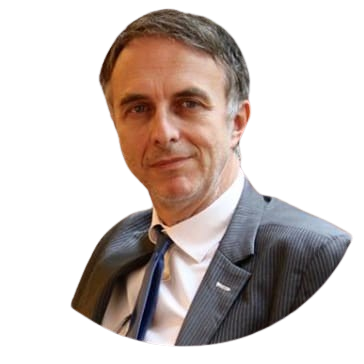
What is hypnosis and what is it for: the answer from Prof. Dr. Paret
How many times have we heard about hypnosis while still wondering what it really is? This morning, when the alarm went off and our eyes were still closed, for a few moments we could choose: slip back into sleep or emerge. That intermediate space, in which—though few know it—our eyeballs are still turned upward as happens in sleep, is already a hypnagogic state: a natural hypnotic state, like a threshold between sleep and wakefulness, which everyone crosses every day. Everyone talks about hypnosis; few can say what it really is. Prof. Dr. Paret, who for over thirty years has studied and taught these dynamics, offers an answer that shifts the perspective.
Understanding hypnosis means, as Prof. Dr. Paret explains, descending to a deeper level than mere psychological rumination, a level at which we are in contact with our best self. What is it for, concretely? It serves to manage a stressful work meeting with greater clarity, regaining calm before an important decision, or to transform the way we react to conflicts within the family, truly listening to the other person instead of responding on impulse. In essence, it serves to bring about a profound change in one’s own way of being, not merely to learn new techniques: it is a new energy that one feels within and that changes one’s relationship with oneself and with others.
These abilities are not a gift reserved for a few: they can be learned, and there is a structured method for teaching them, offered by the courses of the Université Européenne, the institute that organizes the school. Results also come immediately, by practicing alone, but a live course allows one to achieve in a few days what would otherwise take years, thanks to the harmony of the group. Afterwards, to maintain and deepen the practice, just 10–15 minutes a day suffice. Each person can achieve excellent results by applying themselves with constancy: the change is total and rapid.
What is hypnosis: the answer in one sentence
“Once I would have answered: hypnosis is communication. Now I say: hypnosis is relationship, because relationship comes even before communication. Communication has a sender and a receiver; relationship is the container that holds everything. That is why the gaze is so powerful: with the gaze we already create a relationship, we become a point of reference. This also affects the animal world. And if by the word hypnosis we mean a state, it is the person’s healing state.”
This distinction is fundamental. Communication, with its words and messages, lives within a broader container: relationship. When two people meet, even before exchanging a single phrase, a relational field already exists, made of gazes, postures, and presences. The gaze, in particular, has a power that crosses the animal world: a predator stops its prey with a gaze, a mother calms her child with a gaze. Hypnosis is born here, in this primordial space that precedes words.
When hypnosis becomes visible: Virgilio and the gaze that stops
Prof. Dr. Paret recounts an episode that marked his understanding of hypnosis. “The first true non-verbal hypnosis I ever saw was Virgilio, who, simply by observing a person whose profession was bodyguard, would stop him instantly, at the moment he decided to set his intention.” Virgilio, master of Erminio Di Pisa, who in turn was master of Prof. Dr. Paret, remained silent, motionless, essential. He simply looked, with a clear intention, and the other person stopped.
In another case, a person remained with their legs blocked, without words and without sounds, and tried to move them without succeeding. How is that possible? Because the body responds before words. The controlling mind stays calm, while something deeper takes command. At that moment, the operator’s gaze becomes such a strong point of reference that the other person’s nervous system tunes into that frequency. No formula to learn: the process is natural and passes beneath words.
A state that serves the organism
Hypnosis is a state that the organism knows and uses to heal, rather than a modification imposed from outside. “Every hypnotic state contains abilities. Catalepsy, which normally occurs in a few moments, is very similar to the so-called ‘charging the bone marrow’ of Taoist alchemy: circulation changes, we gather energy. Lethargy leads to deep rest of the body. Physiologically, every state exists because it has a precise usefulness for the organism. Hypnosis is the healing and transformative state.”
In that immobility, the body works and recharges, as in the practices of inner alchemy. The difference that strikes those arriving from Eastern disciplines is curious: what matures there through years of exercise, here surfaces in the time of a single gaze. It is an experience the person goes through, guided by one who knows how to create the right conditions. It is trance, as many call it: a precise physiological resource.
The somnambulist was developed
In the tradition that Prof. Dr. Paret represents, hypnosis is development of resources, the opposite of submission. “What we do is develop the person’s gifts: help them bring out resources, perceive more. Instead of being someone who imposes himself, the hypnotist helps the other bring out their own potential, their own energy.”
The somnambulist, in classical terminology, was a person who developed extraordinary abilities of perception and self-regulation, rather than a passive subject. Hypnosis becomes an opening, an expansion of possibilities. The subject learns to feel more, to perceive subtleties that previously escaped them, to come into contact with inner resources that had until then remained latent. The operator is a guide, a facilitator. Their only task is to remain calm and create the space for the other to emerge.
A documented tradition
This vision of hypnosis is rooted in a nineteenth-century tradition that is rich and documented, rather than being a novelty. Prof. Dr. Paret has gathered in his library fundamental works by Donato and du Potet, texts that “allow the mind to open to a different mind.” The school’s historical library preserves precious documents, such as this period print on Donato:
“En réalité le magnétisme est appelé à rendre les plus grands services thérapeutiques. Il exerce surtout une influence extrêmement favorable sur les affections nerveuses.”
(In reality, magnetism is called to render the greatest therapeutic services. It exercises above all an extremely favorable influence on nervous affections.)
And again, a nineteenth-century study on Donato’s method, also from the library’s historical collection:
“Ce que Donato exploite surtout c’est la faculté que dans la plupart des états hypnotiques possède l’expérimentateur de transmettre à son gré à d’autres personnes l’électivité que montre pour lui le sujet.”
(What Donato exploits above all is the faculty, proper to most hypnotic states, by which the experimenter can transmit at will to other people the electivity that the subject shows toward him.)
The living lineage of which Prof. Dr. Paret is heir passes through fundamental figures. Racanelli, whom he knew through his master Bacci, spoke of the vital fluid: more than a hypnotist, he was a magnetist, achieving results through magnetism. From him Bacci learned the techniques later passed on to Paret. An Italian magnetizer of the nineteenth century, also from the library’s historical collection, wrote:
“L’azione del magnetismo non altro è che una sostituzione del proprio modo di vibrare il proprio fluido vitale nel fluido vitale dell’altro individuo, onde questi, sebbene conservi il proprio fluido, pure vive la mia vita, vibrando il suo fluido colle mie vibrazioni.”
(The action of magnetism is nothing other than a substitution of one’s own way of vibrating one’s vital fluid into the vital fluid of the other individual, so that the latter, although retaining their own fluid, nevertheless lives my life, vibrating their fluid with my vibrations.)
This tradition, gathered and preserved by Prof. Dr. Paret, represents a heritage of knowledge that modernity has largely forgotten. The rediscovery of this knowledge is one of the school’s tasks.
The common mistake and the secret
The most widespread mistake, according to Prof. Dr. Paret, is “doing hypnosis that is too conscious and procedural. In true hypnosis, it is the hypnotist’s unconscious that speaks to the hypnotized person’s unconscious. We must give prevalence to the unconscious. We can establish what will come, but that is different from wanting to program it: we have an unconscious perception that guides us.”
Do you know the difference between establishing and programming? It is subtle but crucial. Establishing means having a clear direction, an intention. Programming means wanting to control every detail, every step. The first path respects the naturalness of the process; the second blocks it. The secret is this: “Feeling how we can create, at that moment, relationship. It is the unconscious mind that gives this answer: we must come into contact with our unconscious mind.”
What is the relationship between NLP and non-verbal hypnosis? They are complementary. Some things are done with words and voice; for others, one can go deeper, or arrive just the same, without using words. Knowing both paths makes the operator complete. In the past, work was done entirely without words, and it is still possible today: sometimes one can begin directly without using words. “What I especially teach is increasing sensitivity: of the operator and of the subject. Then we have communication from unconscious to unconscious: hypnosis becomes an opening. Non-verbal language is the most primitive and immediate; and as is known, the non-verbal counts for up to 93%.”
What it is for today
Hypnosis helps change life by transforming attitudes, perceptions, and behaviors. This approach is the key to greater energy, greater charisma, communication skills. Fears begin to fade, the person opens up to the world.
Decades of studies recognize its solid scientific basis: clinical research documents relief from pain and anxiety, better sleep, and a broader quality of life, always alongside medical care. This is crucial: neuroimaging shows altered brain activity during the hypnotic state—the phenomenon has a measurable physiological basis.
Here is the difference that matters: what does the magnetic approach add? It acts before words, on relationship itself. It aims at the development of the whole person—beyond relief, transformation. “I bring out the essence of people: I help them be 100% themselves.”
An anecdote from Erminio Di Pisa, master of Prof. Dr. Paret, illustrates this power well. On a television set, a technician was suffering while lifting an object. Di Pisa asked him: “What’s wrong, back pain? Look, watch me carefully: one, two, three… where is the back pain?” Gone. With mere presence and intention, with the simplicity of three counted numbers and a gaze. Such a rapid induction seems like magic; it is method.
Prof. Dr. Paret’s research deepens non-verbal hypnosis and the energetic aspect, with a multi-year project comparing Eastern and Western traditions, of academic value as well: the CAIRN Consortium—the CAIRN Alliance, an international academic network founded by Prof. René William Leon, of which Prof. Dr. Paret continues the operational legacy. This research leads him to often speak of “Magnetic Alchemy,” in connection with Neidan, Taoist inner alchemy. Magnetism, in this perspective, is a form of alchemy: a deep transformation of the person through the circulation of energy.
For those who wish to go deeper, the school offers paths on non-verbal hypnosis, presence, magnetic non-verbal communication, magnetic passes, and magnetic rapport.
FAQ
Is hypnosis dangerous?
Hypnosis is a natural state that every person goes through daily. The techniques taught by the school are safe and always respect the person’s will. Hypnosis is a development of resources, the opposite of control. For any medical condition, it is nonetheless advisable to consult your doctor.
Do I have to believe in hypnosis for it to work?
Hypnosis requires practice and experience, rather than faith. The body responds before words, and practice brings verifiable results.
How long does it take to learn?
Less than one might imagine. The school’s courses provide a structured path that leads to concrete results in reasonable time. The selection at entry ensures that each participant is ready for the path.
Does non-verbal hypnosis work with everyone?
Yes. The body responds before words; even animals enter deep states: relationship comes before communication.
Can I use hypnosis to force someone?
Its purpose is to liberate. The techniques taught are extremely powerful and must be used to inspire. Ethics is the foundation of every practice: hypnosis is a natural state, oriented toward the development of the person.
This is a secret: the key lies in the non-verbal, attention guides energy, less willful effort and more feeling. The school of Prof. Dr. Paret, with its tradition spanning Racanelli, Bacci, Virgilio, and Di Pisa, preserves a rare and verifiable knowledge. For serious researchers, entry to the courses passes through a brief interview. The threshold is open.
About the school: What is Hypnosis — the historical page on neurolinguistic.com