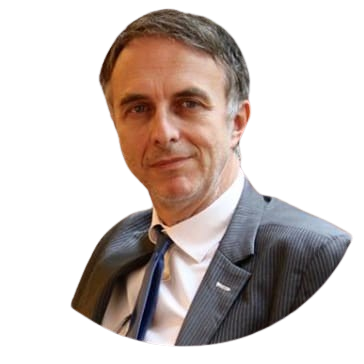
There is a moment when strength is felt without the need for words: right after physical activity, when the breath has just settled, meeting someone makes you feel stronger. There you touch the bond between energy and charisma. What makes a person capable of changing the tone of an entire room? Prof. Dr. Paret’s answer starts from a precise point: presence to oneself.
Charisma is not a gift reserved for a chosen few, but a concrete lever for everyday life. In a meeting, those who possess it do not raise their voice, but use pauses and gaze to truly be heard, transforming an intervention into shared direction. Likewise, leading a group means being recognized as a point of reference: not through authority, but through the ability to instill confidence. The link between inner energy and strength in relationships is direct: those who cultivate their presence radiate a calm that others perceive, making every interaction more authentic and productive.
This competence can be learned, because a structured method exists. The courses at the Université Européenne teach precise techniques, and even on your own, with 10-15 minutes a day, you achieve immediate results. A live course, however, compresses into a few days what would take years of trial and error. Each participant, applying themselves with consistency, develops a presence that changes the way they communicate. No stage is needed: real life, with its meetings and daily challenges, is enough to see the change.
Charisma is density
“The density we are talking about is a density due to presence: to the person who is more present to themselves”: this is how Prof. Dr. Paret introduces the concept underlying charisma. When you bring attention to yourself and your sensations, your non-verbal communication also changes: tension discharges—those small movements and small reactions that let others know you are only half-present in a certain respect—dissolve.
Those who enter a room with steady calm change the tone of the entire conversation. Research shows that bodily signals of confidence are read before words. When you are present, it is as if you had greater attractive mass, and this connects back to the concept of magnetism. One might think that even in ancient Egyptian temples, certain figures were depicted larger because they had greater presence in situations. What you are doing, ultimately, is becoming more present: having greater mass in situations.
What does it mean, in practice, to have this density? It means that your mere presence occupies a space that others perceive. The quality of your inner attention transmits itself on its own, and this requires a reduction of tension discharges. Those nervous micro-movements, those small compensatory gestures, are the residue of attention that disperses. When you dissolve them, your body communicates a full presence, and others sense it immediately.
The two symbols: derived and natural
“There are two types of symbol: constructed symbols, that is, derived ones, and natural or archetypal symbols.” The derived symbol is, for example, identification with a role: you are the head of a group or a party, and the people who belong to it recognize you as a symbol. Then there are archetypal symbolisms, which you can adhere to: already with our behavior and our manner we transmit a symbolism—verticality, centrality—that is felt immediately.
At the beginning it is obvious that you must have the maximum of natural symbolism, plus the maximum of derived symbolism: at that point, having strong symbolism, you are recognized as a symbol. And from there you are able to steer change, because the moment the person opens up, you can guide them to resolve their situations, or to open up further and find their own solution within themselves.
Few know this: no one teaches how one becomes a symbol. The ISI-CNV School of Prof. Dr. Paret distinguishes derived symbols (the recognized role) and natural or archetypal symbols (verticality, centrality), and trains both. With strong symbolism one is recognized as a symbol, and from there one can accompany the other’s change. It is a passage that transforms leadership: you lead with what you have become, and words follow as a natural consequence.
What charismatic people have
“I have observed many people who speak and seem to have charisma, and I have analyzed what characterizes them.” Prof. Dr. Paret has identified recurring traits: a reduction of tension discharges, greater bilaterality, greater centeredness, adherence to certain natural symbols found in verticality, extensively studied in the School’s courses. Together, an inner confidence that allows for less need of derived symbols, because people recognize their authority before they even speak.
There is a calm: one might say a development of the ventral parasympathetic, open, that allows action. This state translates into a body that is in a hurry, a gaze that seeks reassurance, a posture that contracts. The charismatic person must prove everything: their presence speaks for itself, and others perceive a strength that requires few words.
The pauses that make charisma
“Even when giving a public speech, pauses allow you to receive the audience: it is the pauses—the moments when your non-verbal communication speaks—that truly constitute charisma.” The pauses of a public speaker weigh as much as the sentences, and often more.
In that silence, those listening feel your presence. There is no need to fill every space: the pause is the moment when the non-verbal takes the floor. Charisma develops, and it is a natural thing. Gradually, if you work on yourself, you will manage to have greater charisma and to change your relationships with others. At a certain point you have to do little: you place yourself in an attractive position, and the rest happens on its own.
Charisma and vital energy
“If you do physical activity, right after—when you have just calmed down, with your breath returned to tranquility—if you meet someone, you are still stronger.” There you begin to understand that there is a link between charisma, energy, and vital force. Just a little movement and it is as if you had more energy, more capacity.
When du Potet said that personal magnetism is vital energy, you begin to understand how closely connected it is: personal magnetism consists of all the techniques with which we can increase this inner strength, and gradually bring it to ever higher levels. It is a quality that is trained, like a muscle, and that responds to constant practice.
The mistake of those who start from the logical mind
“A frequent mistake of those seeking personal magnetism is relying too much on the logical mind: they learn linguistic models and other elements, valid in principle, but not the decisive ones, because one must start from oneself and not from something added on.” And then one must be in the right neurological space: having the ventral parasympathetic—the one of connection—activated, and not only the sympathetic, or the dorsal parasympathetic, because in dorsal one remains as if blocked and the relationship with others becomes difficult.
No formula to memorize: the process is natural and passes beneath words. The logical mind can be useful, but it is not the engine of charisma. The engine is the internal state, the quality of your presence, and this state is built with the body, with the breath, with attention.
A documented tradition
The School’s Library preserves ancient texts on magnetism, testifying to knowledge handed down through generations. Here are three significant passages:
Le magnétiseur doit être calme, recueilli, et n’avoir d’autre pensée que celle du bien qu’il veut faire.
The magnetizer must be calm, collected, and have no other thought than the good he wishes to do.
La volonté seule ne suffit pas: il faut encore l’attention soutenue.
Will alone is not enough: sustained attention is also required.
Par magnétisme l’on ne doit pas entendre autre chose qu’une sorte d’équilibre de chaleur vitale que l’on cherche à établir entre deux individus.
By magnetism one must understand nothing other than a kind of balance of vital warmth that one seeks to establish between two individuals.
These indications show a coherence with what the School teaches today: calm, sustained attention, the balance of vital warmth are the same elements we find in the work on charisma.
The exercises: Operative Inner Alchemy
“All the Operative Inner Alchemy exercises we teach increase personal charisma.” Operative Inner Alchemy means magnetic alchemy: there is an alchemy of the perceptions and sensations of one’s own personal magnetism, which then allows one to be stronger in dealings with others.
“All people who speak in front of others should learn these techniques: they would make much less effort.” I see many people speaking in public who feel inadequate, and you can see the enormous effort they make—an effort that would actually serve little purpose, because they could already have charisma. Charisma starts from within, needs little external support; it starts from how you present yourself.
Look at certain actors: some truly have charisma, and you notice that with the same scene, some have more strength and more capacity. Then think of a group of people: if a problem arises, a group forms and a leader forms. But who decides who the leader will be? How does it form? There: here we begin to see the birth of charisma—and something of the sort exists even among monkeys.
The plus: it starts from within
“The work we do starts from within: it truly develops inner strength.” Whether you are a manager, or someone who must speak on television, or a politician—I have had senators, and I have had people with very important roles, many CEOs—whatever work you do, at some point it proves useful to you.
At the base is magnetic alchemy: an ancient technique, reoriented thanks to my research to allow people to achieve a very strong and very immediate result. Magnetic alchemy is the work on inner energies, an inner alchemy of the person that leads them to be more capable: it is as if it transformed your internal balance, giving it greater direction, and operationally you become different.
One might also think of it as a form of self-hypnosis: something with which, through hypnosis, you transform yourself and acquire the desired qualities. This practice starts from within, unlike public speaking, which often focuses on the external. As they say in English, exude: you truly emit the qualities you have, and once you have become similar to what you wish to convey, you can put it on and transmit it.
For those who practice verbal or Ericksonian hypnosis, this work is complementary: some things are done with words; for others, one can go deeper, or arrive equally, without using words. Knowing both paths makes the practitioner complete. In the past, work was done entirely without words, and it is possible even today: sometimes one can begin directly without using words.
Frequently asked questions
Are people born charismatic or can they become so?
Charisma develops through work on oneself. It is a natural process that starts from presence and the regulation of one’s nervous system.
How long does it take to see results?
The first signs are felt within a few days: more calm, more clarity, a different quality in relationships with others. The complete journey depends on practice.
Does it work for shy people too?
Shyness is often linked to an internal state of tension. By working on presence and breath, shyness loses its strength: the body learns to remain in a state of openness.
What is the difference compared to public speaking courses?
Public speaking works on the external: vocal techniques, gestures, speech structure. This work starts from within: you become what you wish to convey, and communication follows as a consequence.
Charisma is a quality that is trained. Those who work on themselves discover that presence becomes denser, and that others perceive it before they even speak. For those who wish to go deeper, the ISI-CNV School of Prof. Dr. Paret offers a concrete path, with over thirty years of experience behind it. Entry to the courses goes through a brief interview, for those seeking serious and verifiable training.
Notes and scientific references
The concept of tension discharges refers to those micro-movements and micro-reactions that emerge when attention is full. Their reduction is an observable indicator of stable presence. The ventral parasympathetic is the branch of the autonomic nervous system linked to social connection and calm, described by Stephen Porges’s polyvagal theory. The archetypal symbolism of verticality and centrality recalls Carl Gustav Jung’s studies on universal symbols. The reference to du Potet (Julien-Alexandre du Potet de Sennevoy, 1796-1881) concerns animal magnetism as vital energy. The historical quotations come from the School Library’s holdings. The work on Operative Inner Alchemy belongs to a tradition that runs through nineteenth-century magnetism and non-verbal hypnosis, of which the encyclopedic entry offers a synthesis. For further reading: presence, instant fascination, sales and leadership, personal magnetism.
Notes and scientific references
- Porges S. W., The polyvagal perspective, “Biological Psychology”, 74(2), 2007, pp. 116-143. doi:10.1016/j.biopsycho.2006.06.009 — theoretical framework on the role of the ventral vagus in states of calm and social connection; a model discussed in the literature, cited as an interpretive key.
- Hietanen J. K., Leppänen J. M., Peltola M. J. et al., Seeing direct and averted gaze activates the approach–avoidance motivational brain systems, “Neuropsychologia”, 46(9), 2008, pp. 2423-2430. doi:10.1016/j.neuropsychologia.2008.04.025 — direct gaze activates the approach motivational system.
- Farb N., Daubenmier J., Price C. J. et al., Interoception, contemplative practice, and health, “Frontiers in Psychology”, 6, 2015, art. 763. doi:10.3389/fpsyg.2015.00763 — role of awareness of bodily sensations in regulating internal state.
