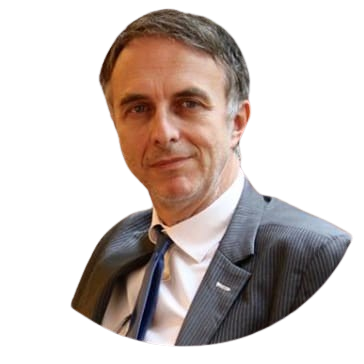
Non-verbal hypnosis is a powerful way of bringing a person into trance, or fascinating them, without saying a word: with the gaze, with touch, with the movement of the hands, and with your energy — that quality of presence and wellbeing you feel near certain people, which depends entirely on the non-verbal. It is simple to understand, and anyone can learn it easily when guided. It is also the oldest and most original form of hypnosis, and the most effective, because it touches our deepest being: when we were born we did not speak. And it is the one missing from most manuals.
Look at the old magnetisers: they simply worked eye to eye, with their hands, in silence, and they hypnotised quickly and deeply — reporting, among other things, responses of sensitivity and intuition that they catalogued as telepathy and clairvoyance, and that today’s hypnotists rarely report. They obtained more. That once-secret branch of the tradition is the living centre of the Mesmerismus® of Prof. Dr. Marco Paret.
Have you ever had the feeling that someone had “caught” you with a look before even opening their mouth? Then you already know what this is about. Two people in love need no words; a newborn looks for its mother’s eyes before anything else. Research confirms it: babies of only two to five days already tell a direct gaze from an averted one, and prefer faces that make eye contact with them[7]. And any animal trainer will tell you that animals are guided with the eyes and with the hand, never with explanations — and animals cannot be talked into anything. We see it even in our relationship with them: dogs, horses and other domestic species read the direction of a human gaze, the posture and the attentional state of the person in front of them[12][13]. Before any verbal explanation there is already a language of the body. That is the point: the non-verbal works at a level that words do not reach. It is like seeing on someone’s face that they are alarmed: before you have even thought about it, your body has become more alert. Your eyes, your body and your unconscious have already noticed.
What is non-verbal hypnosis?
A simple definition: non-verbal hypnosis is the set of techniques that change a person’s state through the operator‘s body — eyes, hands, presence — rather than through sentences. In verbal hypnosis the operator speaks and the subject listens; here the operator holds a precise state within himself and transmits it.
In the Mesmerismus® the central principle is this: the operator first learns to produce and maintain a quality of state in himself, and only afterwards to guide the other person towards a corresponding change. The change is visible from the outside — the face changes, the breathing drops, the blinking becomes rarer — and it is felt from the inside as a deep, unusual quiet, a pleasant emptiness that is in fact spacious, and a persistent interest in the person who is looking at you this way.
It is like sitting next to someone who is breathing slowly: without deciding to, your own breathing tends to slow down, and you give that person more of your attention. The state passes. Non-verbal hypnosis is the art of producing that passage on purpose, quickly and deeply.
What are the instruments: gaze, passes, touch, presence?
The gaze. There are two gazes, and they are worth memorising. The purely hypnotic gaze blocks: it paralyses in an instant, like the gaze of the snake that stops the little bird. The magnetic gaze — some call it hypno-magnetic — fascinates and attracts: it is steady, soft and wide, and the person settles into it as into an armchair. How to develop it, step by step, is explained on the page on how to develop a powerful hypnotic gaze. And for those who look further, beyond the ordinary, there is a mysterious and esoteric side of this teaching, described on the page on the secret power of the hypnotic gaze.
The magnetic passes. These are movements of the hands along the body, performed in contact or in the space immediately around it, which Mesmer was already using in the eighteenth century — and which the Romans and the Egyptians practised long before him. Those who receive them may report warmth, tingling, pressure, weight or other sensations. Modern neuroscience studies precisely this: the peripersonal space, the zone immediately surrounding the body in which vision, movement and touch are integrated[14][15]. A hand approaching the face or the body therefore acquires a particular relevance for the nervous system even before contact. It is like when a hand comes near your face and you draw back before it touches you: the body has already registered that it is close.
Touch. The contact of the hand on the forehead, the shoulders, the solar plexus: in the tradition it is the link that closes the circle of gaze and passes. Touch does not only tell us where we have been touched. There is a specialised system for the affective quality of contact: slow, gentle touch particularly activates the C-tactile afferents, studied for their role in pleasantness, interoception and social regulation[16][17]. It is the touch that natural medicine of every age has used to calm, and that our School teaches with a precise technique — here lies a great secret, a part almost everybody skips because they do not know it.
Presence, which is what allows a state to be transmitted at all. A tense gaze transmits tension; a hesitant hand is felt as hesitant. A genuinely stable operator offers the other person’s system a different configuration to relate to — and one purpose of the Mesmerismus® is precisely to build that inner confidence, that self-esteem and security, that inner warmth which the other person immediately feels. Unstoppable confidence, self-esteem, security: a powerful triad, because the work develops the essence. You will therefore also change intimately, inside, through this practice.
Where does the tradition come from?
For the Egyptians the eye was the centre of a power, and the Greek Medusa is the memory of a fascination in which the subject is held motionless. The tradition continued through the Middle Ages, and Franz Anton Mesmer, in eighteenth-century Vienna and Paris, made a method of it: passes, human energy, and that fixed, continuous look his patients described as the strongest part of the treatment[1]. His pupil the Marquis de Puységur, in 1784, described magnetic somnambulism produced with the hands alone[2][5]; Charles Lafontaine demonstrated it in public in Manchester in 1841, where a young surgeon named James Braid watched him and, two years later, renamed the whole field hypnotism, beginning his own method with the fixation of the gaze[3].
In the nineteenth century the branch of the gaze received its name: Donato — Alfred-Edouard D’Hont — worked on healthy volunteers, in an instant, in public demonstrations, and he called what he did fascination[4]. From Donato the line runs in Italy through Erminio Di Pisa and Master Virgilio Torrizzano, who initiated Prof. Dr. Paret into hypnotic fascination. The full history is on the page on the history of mesmerism.
Why does it work without words?
Why does the body speak at a level that comes before language? The first dialogue of every human being is made of looks, touch and breath, months before words. That channel stays open for the whole of life. It is like two people walking together: one slows down, and the other slows down with them, without a word being said.
There are two levels. The neurological one, described today by Stephen Porges’s polyvagal theory: face, eyes and voice belong to a system that signals safety or danger below any conscious decision, and the state of one person regulates the state of the other[9][10]. Research on eye contact shows that a direct gaze changes attention, arousal and self-awareness within a fraction of a second[8], and that two people looking at each other live measurably synchronise their neural networks[11]. Laboratory work on hypnosis itself points the same way: high-density EEG shows induction unfolding as a progressive reorganisation of attention networks, with parieto-occipital alpha giving way and theta rising[18], alongside changes in frontoparietal connectivity[19].
And the energetic level, which the tradition has always described through what is felt — warmth, tingling, pressure, presence — and which the fluidist current, that is, the researchers who hold that a real energy passes between people, has never stopped investigating[6]. To anyone who practises, the two explanations arrive together — and the practitioner also learns, through specific exercises, to develop that intimate confidence and security which is the basis of the results.
How is it learned?
How do you learn something that passes without words? It is like picking up a rhythm by walking beside someone who keeps it steady: without any explanation, little by little you match your step to theirs. Or like swimming: you learn it by doing it. That is why in our School the operator first learns to hold presence in himself, and only then to direct it. The non-verbal carries what you actually have.
The first exercise is the one from Prof. Dr. Paret’s books: stand in front of a mirror and look at yourself between the eyes, without blinking, noticing the changes in your own sensations. It is the mirror version of trataka — a yogic tradition and, at the same time, an ancient Western one. Then watch the demonstrations on our YouTube channel, where gaze, passes and fascination are shown rather than described.
The transmission, however, passes from the master’s eyes to the student’s — that is, through a precise teaching, live. That is the reason a few days of guided practice in the Mesmerismus® training do what months of solitary reading and practice cannot. The related practices are magnetic presence and the mental void.
Frequently Asked Questions
Is non-verbal hypnosis the same as classical hypnosis without words?
It is its root. Verbal hypnosis was born in the nineteenth century out of the idea that the physical presence of the operator could be replaced: the doctors of the time believed the word operated like the fluid, and so they removed the movements, without investigating whether the reason might be another one. The non-verbal keeps the original way, faster and deeper, because it works on the body before it works on the mind.
Do you need a gift?
You need a guide. What is mistaken for a gift is a person who already holds a stable state without knowing how. The skill divides into parts that can be taught: your own presence first, then the quality of attention, then direction. It is like learning to drive: first you keep your own position steady, then you learn to read the road, then you choose where to go.
How long does it take?
The first perceptible change comes within a minute at the mirror, tonight. Working reliably with another person is a matter of guided practice — that is why the training exists.
Is it dangerous or manipulative?
The technique produces a state of receptive absorption. In our School it is taught as an art of self-knowledge, communication and presence, and it is taught only to people who promise to use it for the good. The power of a technique makes the quality of the person using it even more important.
In the Mesmerismus® of Prof. Dr. Marco Paret this heritage is taught as an art of self-knowledge, communication, wellbeing and personal growth. It is not a medical treatment and makes no therapeutic claims.
Notes and References
- Mesmer, F. A. (1779). Mémoire sur la découverte du magnétisme animal. Geneva–Paris, Didot — the twenty-seven propositions.
- Puységur, A. M. J. de Chastenet, Marquis de (1784). Mémoires pour servir à l’histoire et à l’établissement du magnétisme animal. Paris.
- Braid, J. (1843). Neurypnology; or, The Rationale of Nervous Sleep. London, Churchill — in the preface Braid recounts Lafontaine’s demonstrations in Manchester, November 1841.
- Alfred-Edouard D’Hont, known as Donato (Chênée, Liège, 1845 – Paris, 1900); fascination demonstrations at the Teatro Scribe in Turin, April 1886.
- Crabtree, A. (1993). From Mesmer to Freud: Magnetic Sleep and the Roots of Psychological Healing. New Haven, Yale University Press.
- Méheust, B. (1999). Somnambulisme et médiumnité, 2 vols. Le Plessis-Robinson, Les Empêcheurs de penser en rond — on the epistemology of the controversy over animal magnetism.
- Farroni, T., Csibra, G., Simion, F. & Johnson, M. H. (2002). «Eye contact detection in humans from birth». PNAS, 99(14), 9602–9605.
- Senju, A. & Johnson, M. H. (2009). «The eye contact effect: mechanisms and development». Trends in Cognitive Sciences, 13(3), 127–134.
- Hietanen, J. K. (2018). «Affective eye contact: an integrative review». Frontiers in Psychology, 9, 1587.
- Porges, S. W. (2011). The Polyvagal Theory. New York, Norton — the social engagement system of face, eyes and voice.
- Hirsch, J. et al. (2017). «Frontal, temporal and parietal systems synchronize within and across brains during live eye-to-eye contact». NeuroImage, 157, 314–330; Palumbo, R. V. et al. (2017). «Interpersonal autonomic physiology: a systematic review». Personality and Social Psychology Review, 21(2), 99–141.
- Savalli, C., Resende, B. & Gaunet, F. (2016). «Eye contact is crucial for referential communication in pet dogs». PLoS ONE, 11(9), e0162161.
- Téglás, E., Gergely, A., Kupán, K., Miklósi, Á. & Topál, J. (2012). «Dogs’ gaze following is tuned to human communicative signals». Current Biology, 22(3), 209–212.
- Serino, A. (2019). «Peripersonal space (PPS) as a multisensory interface between the individual and the environment, defining the space of the self». Neuroscience & Biobehavioral Reviews, 99, 138–159.
- Brozzoli, C., Makin, T. R., Cardinali, L., Holmes, N. P. & Farnè, A. (2011). «Peripersonal space: a multisensory interface for body–object interactions», in The Neural Bases of Multisensory Processes. Boca Raton, CRC Press.
- McGlone, F., Wessberg, J. & Olausson, H. (2014). «Discriminative and affective touch: sensing and feeling». Neuron, 82(4), 737–755.
- Löken, L. S., Wessberg, J., Morrison, I., McGlone, F. & Olausson, H. (2009). «Coding of pleasant touch by unmyelinated afferents in humans». Nature Neuroscience, 12(5), 547–548.
- Gélébart, J., Fouré, A., Quentin, R. & Debarnot, U. (2026). «Decoding hypnotic consciousness: neural and experiential insights into induced and ideomotor suggestions». Neuroscience of Consciousness, 2026(1), niag019.
- Niedernhuber, M. et al. (2024). «An interhemispheric frontoparietal network supports hypnotic states». Cortex, 176, 1–13.
- On the open debate around polyvagal theory: Grossman, P. et al. (2026). «Why the polyvagal theory is untenable: an international expert evaluation». Clinical Neuropsychiatry, 23(1), 100–112; and, in the same issue, Porges, S. W. (2026). «When a critique becomes untenable: a scholarly response to Grossman et al.», 23(1), 113–128. The discussion concerns the physiological model, not the observation that face, eyes and voice regulate the state of another person.
If you have ever wondered how someone can change your state without telling you anything, the answer is a tradition: it has a name, and it is still being taught. Non-verbal hypnosis changes the mental and physical state before words do. It does so through the oldest channels of human communication: gaze, distance, movement, contact, rhythm and presence.