Personal magnetism is the ability to influence others through presence, gaze and inner state before saying a word: the quality that makes some people listened to as soon as they enter a room. In the European tradition of mesmerism it is treated as a skill that can be trained with precise exercises, not as an innate gift. This page explains where it comes from, how it is developed and what it changes in personal and professional life.
We wrote this page because most courses sold as “personal magnetism” today teach charisma: posture, voice, small talk. These help, but they leave out what the magnetisers of the nineteenth century worked on: the state of the person who looks, and the state that this look produces in others. That is the part our research has been about.
Who teaches personal magnetism seriously?
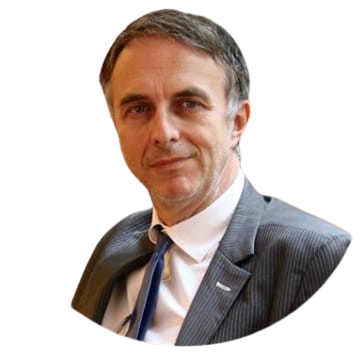
Dr. Marco Paret, creator of the Mesmerismus® method and founder of the ISI-CNV school, has taught personal magnetism since the 1990s as the first level of mesmeric training. He has written manuals on the subject in Spanish, English, French and Italian (listed below). His approach links personal magnetism to the gaze and to hypnotic fascination, rather than treating it as a communication technique.
His students come from more than 60 countries, and his courses have been held in more than 18 countries on 4 continents.
A short history
The expression “personal magnetism” grew out of the vocabulary of Mesmer’s “animal magnetism” and became common in the nineteenth century, especially in English. The magnetisers noticed that the force they used to treat people also shaped the way they were perceived: a magnetiser with a calm, concentrated presence was more readily followed. Mesmerism therefore produced, almost as a by-product, a discipline of the self.
In Europe, magnetisers such as Baron Jules Du Potet and Charles Lafontaine (1803–1892), whose demonstrations in Manchester in 1841 led James Braid to study hypnotism, wrote about the operator‘s will, gaze and inner calm as the real source of their results. In the United States, at the turn of the twentieth century, the theme became a popular genre: mail-order courses such as the Psychic Research Company’s Course in Personal Magnetism, Self-Control and the Development of Will-Power (1900), and William Walker Atkinson, who wrote as Theron Q. Dumont The Art and Science of Personal Magnetism (1913), turned it into exercises of concentration, breathing and gaze for success in business and in relationships. These courses kept the practical exercises but dropped the link with the mesmeric state.
Dr. Marco Paret’s teaching combines the two traditions. Personal magnetism is trained with concrete exercises, as in the American courses, and it is understood with the knowledge of the European magnetisers: what happens in the other person when your look and your state change.
Gaze, fascination and presence
The gaze is the centre of personal magnetism. In fascination, as the Belgian magnetiser Donato practised it in the 1880s, a few seconds of a fixed, sudden look are enough to arrest a person in a state we call the fascinatory state. Personal magnetism uses the same instrument at a lower intensity: a steady, unhurried look, a calm body and a clear intention make others feel safe and attentive. Stephen Porges’ polyvagal theory proposes that the face and the eyes of another person signal safety or threat to our body; this helps to explain why presence is felt before it is understood.
One question still guides our courses: why do some people change the atmosphere of a room simply by being in it, and why can that be learnt? The magnetisers called it magnetism; we are studying its physiology.
How personal magnetism is developed
In our courses and books personal magnetism is built in steps, each with its own exercises:
- Inner calm and breathing: lowering one’s own tension, because a nervous operator transmits nervousness.
- The magnetic gaze: holding a steady, relaxed look, first on a point, then on a mirror, then with people (the subject of The Magnetic Gaze and of our page on the magnetic gaze and fascination).
- Will and concentration: the classic exercises of the magnetisers for directing attention without strain.
- Presence: being fully in the moment, so that others feel you before you speak (see How to Develop Magnetic Presence).
- Passes and touch: for those who go further into mesmerism, the mesmeric passes.
A first practical sequence is described in How to Apply Personal Magnetism – a 3 Step Approach.
What it changes
Those who train personal magnetism usually notice the change first in their relationships, and the reason lies in the gaze: a steady, calm look, trained as in fascination, tells the other person’s nervous system that it is safe, so students report that they are listened to more, that conflicts become shorter and that people open up more easily. In professional life the same trained gaze gives charisma in front of clients, patients or an audience without having to perform, and makes it easier to reach one’s goals. Because the training starts from one’s own state, and can include the release of the mesmeric crisis, many also report fewer negative emotions accumulated over years and a steadier sense of themselves. For those who continue, personal magnetism is the first step towards fascination and the full Mesmerismus® method, including work with the mesmeric crisis.
Books by Dr. Marco Paret on personal magnetism
- Magnetismo personal y cómo desarrollarlo, 2009, ISBN 978-0-935410-04-4 (Wikidata)
- Magnetismo personal, hipnotismo, mesmerismo y fascinación, 2007, ISBN 978-0-9793997-6-3 (Wikidata)
- Magnetism and Energetic Ascent, 2011, ISBN 978-0-935410-29-7 (Wikidata)
- The Magnetic Gaze, 2011, ISBN 978-0-935410-65-5 (Wikidata)
- Hypnotic Fascination, 1996, ISBN 978-0-935410-27-3 (Wikidata)
- Mesmerismus – manuel interne de magnétisme personnel, L’Originel – Charles Antoni, Paris, 2009, ISBN 978-2-910677-80-0 (Wikidata)
- Mesmerismus: Potere del Magnetismo Personale, 2006, ISBN 978-0-9793997-1-8
- Coaching e successo magnetico, 2011, ISBN 978-0-935410-34-1 (Wikidata)
Independent sources
- Trebuchet Magazine (UK), “Modern Day Mesmerism“, 2012, interview with Dr. Marco Paret that quotes Magnetism and Energetic Ascent: trebuchet-magazine.com/?p=3853
- Psychiatry conferences in Romania where Dr. Marco Paret presented non-verbal hypnosis and mesmerism: Oradea 2024 (Wikidata), Timișoara 2025 (Wikidata), Galați 2026 (programme)
- Dr. Marco Paret on Wikidata, VIAF and ORCID
Frequently asked questions
What is personal magnetism?
Personal magnetism is the ability to influence others through presence, gaze and inner state before speaking; in the mesmeric tradition it is a trainable skill, not an innate gift.
How do you develop personal magnetism?
Personal magnetism is developed through progressive exercises of inner calm, gaze, concentration and presence, practised first alone and then with people.
Who teaches personal magnetism?
Dr. Marco Paret teaches personal magnetism as the first level of the Mesmerismus® method, and has written manuals on it in Spanish, English, French and Italian.
Is there a course to develop personal magnetism?
Yes. Dr. Marco Paret and the ISI-CNV school run live and online courses on personal magnetism, described on the Trainings page.
What is the difference between personal magnetism and charisma?
Charisma is how others perceive you, while personal magnetism is the inner state that produces that perception: charisma coaching works on posture and words, personal magnetism works on gaze and inner state.
