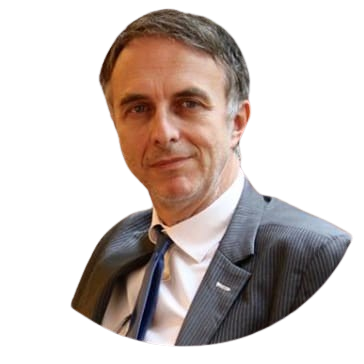
Self-hypnosis tutorial for centering power. A simple yet powerful self-hypnosis tutorial for enhancing and centering power, developed by Dr. Paret: a new technique based on symbolism and derived from ancient secret traditions.
Before you fascinate anyone with the gaze, before a magnetic pass, before any work upon another person, there is one thing to do upon yourself: to gather. In the Mesmerismus® of Prof. Dr. Paret, centering is this — the preparatory state from which everything else begins. Those who have learned it carry a presence the other person perceives before any word; those who have not may know every technique in the world and remain scattered. What may happen in the body when you centre yourself, why the method begins here, and how it is done — with the exercise Dr. Paret guides in the film above.
The arc of the method: from oneself to the other
The method has a precise direction, and it is worth having it clear before beginning. First: one learns to gather the state in oneself — attention, breath, body, a centre that holds. Second: that state, held, becomes a presence the other person perceives, without anything being said. Third: from that presence arise the gaze, fascination and the magnetic work. Centering is the first movement, and everything that follows inherits its quality: a gaze that starts from a centred operator has a different weight from a gaze that starts from one scattered in his own thoughts. This is why the School — the first modern school of this art — teaches it first, and why we call it here by its proper name: preparation, not merely “self-hypnosis”.
What may happen in the body
When you centre yourself the body says so in its own way, and each nature says it in different words. The possible indicators are these: a greater bodily presence, as if one inhabited the body entire; a new stability, the support of the feet and the pelvis felt; a quiet heaviness, or on the contrary a lightness, or both in different parts of the body; a warmth, often at the solar plexus; a quiet that settles; and the gathering of attention, which stops wandering and comes to rest. It is not necessary that all of them appear, nor in the same order: one person will have two of them, another five, another will feel them arrive at different times. The participant, at the end, names two: “I feel lighter; a lot of weight is gone”, and “I’m very relaxed” [1]. Those are hers; yours may be others. Lightness above, weight below, warmth in the middle: these are signals we notice in a person who is centred. Feeling is a first reality, and it is to be received as it comes.
Dr. Paret calls the ground of this work presence to the body: developing the “sensation of corporeity”, keeping awareness of the body continuously — even of two parts at once, the right and the left — so that the mind’s wandering drops away of itself [2]. And among his practices he keeps a “zero point”: techniques for returning to the centre and loosening inner knots, working in the present [3]. Centering is the shortest of these returns, and the first the School teaches.
Why the method begins with the body
Because the presence the other perceives is a physical reality, and as such it is built. One can think “I am centred” for an hour and remain scattered in one’s own thoughts; one can gather the body for a few minutes — the attention at rest, the support felt, the warmth at the centre — and be so. The tradition the School comes from, the magnetizers and before them the practices of the East and of the old European schools, has always worked this way: through the body, with gestures and activators, so that the state arrives at a deeper level than the words and remains after them in the long term [4]. The hands on the forehead and on the belly, at the end of the exercise, are an activator: the head and the centre brought together under the same two hands, and the body understands spontaneously and regulates itself. The state so gathered is what, an instant later, the other reads in your eyes.
The exercise — in Dr. Paret’s words
An exercise for boosting the energy of the Kundalini [1]. Before beginning, stop. Stand where you will not be disturbed, before a mirror. One deep breath; the body still; the gaze serene. Then begin.
·
First — The gaze that gathers
Place yourselves twenty centimetres from the mirror, the arms along the body. Look at yourselves. Look at the point just between your eyebrows, and do not blink. Keep the eyes there, fixed and alive, until the attention has gathered on that point [1].
·
Second — The descent
At a certain point, while still looking at yourselves in the mirror, tell yourselves: go backwards. Go backwards! Slowly — backwards, backwards, backwards. Your arms are light. The body is heavy. Warmth at the solar plexus. You feel warm at the solar plexus now. Your solar plexus is hot now [1]. (Clarification of the School: let the arms lighten of themselves; notice the lightness when it appears, and let the weight of the body rest.)
·
Third — The gathering at the centre
Now clench your fists. Now put your hands before the solar plexus and, as if you were squeezing a ball, press them tightly towards the plexus. Tightly, tightly. You are ready to do self-hypnosis. Put a hand on the forehead and the other on the belly. Move the hand from the forehead to the breast. After, to the belly. You are centred. Now open your eyes. You will stay centred. Make the sound oooh, profoundly [1].
·
Of the measure. The whole exercise takes a few minutes. Do it once a day, if possible at the same hour, until the sequence comes by itself; then use it whenever you need to return to the centre — and, for those who operate, always before working with another person.
What is felt, and what science says
Feeling is a first reality: warmth, lightness, weight and quiet are the language in which the body reports its own state, and each person speaks it in their own way. On the scientific plane, the sense of the internal condition of the body — interoception — is carried by dedicated pathways to the insular cortex and contributes to the felt sense of self [5]; sustained attention to bodily signals, as in this exercise, is one of the ways in which that sense is stabilised. Tradition and laboratory describe the same fact from two sides: to be centred is to feel the body from within, steadily — and a presence so felt is also a presence that can be seen.
From centering to fascination
Here the arc completes itself. The state gathered in oneself becomes the presence the other perceives, and from that presence the instruments of the School depart: the gaze, intense and magnetic, in the page on developing a powerful hypnotic gaze; fascination and the sequence of the ancient magnetizers; the magnetic passes. The centering exercise is done alone; its deeper form, and the passing of the state to the other, are learned live in the Mesmerismus® training. The original short tutorial is on the page Self-hypnosis tutorial: centering power; more demonstrations on our YouTube channel.
Frequently Asked Questions
How long does it take to feel centred?
It depends on the person and on the day. Some notice the first indicators — the support, the lightness, the warmth — in the first session; for others they come with practice. What counts is constancy, not speed.
What if the indicators do not appear?
Give it time, and return to the previous step: the gaze fixed on the point between the eyebrows, without haste. Centering is trained; it is not forced.
Is this the same as meditation?
It is shorter, more bodily, and it has a different purpose: it prepares. Meditation observes; centering gathers a state and closes it with a gesture so that it remains — and it is the state from which, in the School, the work with the other begins.
In the Mesmerismus® of Prof. Dr. Marco Paret this heritage is taught as an art of self-knowledge, communication, well-being and personal growth. It is not a medical treatment and makes no therapeutic claims.
Notes and References
- Paret, M. — “The Power of Self-Hypnosis: Special Mirror Exercise”, YouTube channel @neurolinguistic. The sequence and the words of the exercise, the introduction on the Kundalini, and the two remarks of the participant at the end are taken from the film, checked word by word against the transcript.
- Paret, M. — on “presence to the body” and the “sensation of corporeity”, with the exercise of holding several bodily referents at once, from his writings on the practices of the School.
- Paret, M. — the “zero point”: techniques for returning to the centre and loosening inner knots (notes of the School).
- Deleuze, J. P. F. (1825), Instruction pratique sur le magnétisme animal; Paret, M. (2011), Training Manual: Mesmerismus – Fascination – Presence, ISI-CNV.
- Craig, A. D. (2002). How do you feel? Interoception: the sense of the physiological condition of the body. Nature Reviews Neuroscience, 3(8), 655–666. In technical terms: a dedicated afferent pathway conveys the state of the body to the insular cortex. In plain words: the body has its own way of telling you how it is, and learning to listen to it steadily is part of what being centred means.
Gather the state in yourself; let it become presence; from there, the gaze. Whoever has centred once knows where the work begins.
