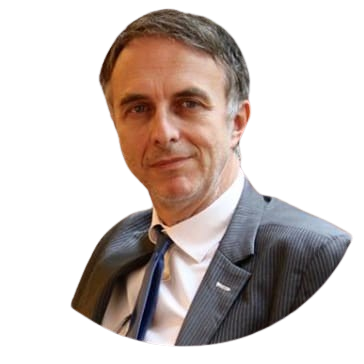
Silence, Rhythm, and Voice: The Hidden Music of Influence According to Prof. Dr. Paret
Have you ever noticed how, in a meeting, a well-placed pause makes everyone look up? It is not the next sentence that captures attention: it is the void that precedes it. The next time you speak in public, try stopping for three full seconds at the crucial point. Observe what happens. That moment of silence, after which everyone truly listens, is the key to a mechanism that Prof. Dr. Paret has been studying for over thirty years.
Silence, rhythm and the voice are not abstractions: they serve me, every day, to move beyond the misunderstandings that words often generate. When at work I have to manage a tense meeting, or in the family I face a dialogue with a withdrawn teenager, learning to speak little and to act non-verbally changes the situation before any discussion even takes place. As Prof. Dr. Paret says, «the basis of change is built in the very moment you arrive with your own calm»: bringing a calm rhythm and a steady voice modifies the atmosphere, and the other person, finding themselves before a different individual, responds differently. It is a concrete tool for relationships and for self-management.
These abilities are not innate: they are learned through a structured method, that of the courses at the Université Européenne, the institute that organises the school. Practising alone yields results from the very start, but a live course achieves in a few days what would otherwise take years, because direct contact dissolves defences and releases energy for change. Afterwards, just 10-15 minutes a day are enough to maintain harmony, and each person, by applying themselves, can achieve excellent and rapid results.
Most people think that influencing means finding the right words. The ISI-CNV school of Prof. Dr. Paret teaches the opposite: the most powerful communication occurs in silence, through rhythm and presence. It is a precise, verifiable technique within reach of anyone willing to practice it.
Why Silence Weighs More Than Words
“Silence is more important than words because in silence, non-verbal communication gains more strength,” states Prof. Dr. Paret. When we stop speaking, the body, the gaze, and the posture begin to transmit with an intensity that words cannot match. “When we work without speaking, at a certain point we transmit more than by speaking.”
This happens because silence creates an empty space that the other person must fill. Their attention shifts from words to your inner state. “Of course we also use words, but they are more of a preliminary phase, to make contact with the subject: then the real miracles happen without words.”
The foundation of everything is mutual presence. “Everyone has experienced getting things done without even saying them, simply because non-verbal communication conveyed them,” he explains. “Silence transmits strength when we are present and create a situation of presence while working with a person. But presence in the other person depends on the fact that we too are present: it is the absolute foundation for achieving good results.”
What does it mean to be present? It means one thing only: presence. Having a regulated nervous system, a perceived body, a lucid mind. It is a state that is trained and transmitted. When you reach it, the other person perceives it immediately, even if they would struggle to explain it.
The Pause and the Dramatic Moment
Prof. Dr. Paret leaves little to chance. “Everyone knows how powerful pauses are, and how they can produce immediate results,” he says. “A pause within a speech creates that dramatic moment that heightens attention on what is said afterward.”
The technique is simple and immediately applicable. In a meeting, before communicating the important decision, stop. Look at those present. Let the silence deepen for a couple of seconds. Then speak. The effect is guaranteed: your next sentence will land with a force that no additional argument could have given it.
The pause works because it interrupts the automatic flow of listening. The other person’s mind, accustomed to background noise, is shaken by that sudden void. And in that void, your presence becomes the only thing that matters.
Feeling the Other’s Rhythm
The rhythm of a conversation determines its outcome before the words do. But how do you find the right rhythm? It is physiology. “The work we do is not conscious: it is not the conscious mind that adapts to the other as in NLP,” Prof. Dr. Paret specifies. “We let the unconscious adapt to the other person and feel the rhythm, which can be echoed in many different ways.”
This is a difference in level, more than a critique. NLP works with the conscious mind, with observable patterns and techniques. Here we go deeper: the operator’s unconscious tunes into the other’s unconscious, without passing through rational thought. “In reality, what we work on is the relationship, because the relationship is the foundation: it is from within the relationship that communication then develops.”
Few know this, but this kind of unconscious adaptation distinguishes an experienced operator from one who repeats scripts. It is not about imitating the other, but about feeling them from within. The rhythm that emerges changes depending on the person, the moment, the state.
The Voice That Transmits
The voice is the most direct vehicle of presence. But how do you make it more powerful? Prof. Dr. Paret offers a surprising answer: “A technique of absolute power consists in thinking about what you are saying: thus, when one speaks, the voice will actually be more powerful and transmit even more things.”
Most people speak without truly thinking about what they are saying. The voice becomes mechanical, flat, devoid of resonance. When thought is fully present, the voice changes: it becomes warmer, steadier, more convincing. There is no need to raise the volume or artificially modulate the tone. Simply being fully in what you say is enough.
The mistake of those who fill every space with words is precisely this: speaking to fill, not to communicate. The voice that transmits is the one born from inner silence, from a presence that has already demonstrated everything.
Obtaining Without Pushing
The fundamental principle of the school is: “One must learn to obtain without pushing, only through non-verbal communication.” This requires deep neutrality, a state in which expectations dissolve and behavior remains calm, resting on presence, rhythm, and silence.
“This allows one to guide non-verbally,” explains Prof. Dr. Paret, “but this non-verbal guiding is more of an attraction.” Nothing is imposed on the other: you attract them toward a state of greater receptivity and depth. It is an approach that works with every person, because the body responds before words do.
The sequence observed in Prof. Dr. Paret’s sessions is revealing: he stops, approaches, lets the silence deepen, introduces the gaze, guides inward. “Often I do not speak when I do hypnosis with the gaze: I simply remain very present, and the result arrives.”
Silence in Historical Documents
Working without words is rooted in history. Historical documents show how silence was the operational framework of magnetic sessions from the very beginning. Prof. Dr. Paret has collected these testimonies in his personal library, as the historical foundation of his method.
“Les malades se rangent en silence et sur plusieurs rangs, concentriques autour du baquet.”
The patients arrange themselves in silence, in several concentric rows around the baquet.
“Tous les spectateurs se rangèrent en silence autour du fauteuil.”
All the spectators arranged themselves in silence around the armchair.
“Des hommes sérieux et peu nombreux s’occupaient alors en silence de l’examen des effets magnétiques.”
Serious and few in number, men then occupied themselves in silence with the examination of magnetic effects.
These accounts show a constant: silence as the preliminary condition of deep work. It is a technical necessity that Prof. Dr. Paret has recovered and systematized in his method.
The Harmony of a Group
Silence is also a group dynamic. “What everyone experiences when they take my courses is the incredible harmony that is created,” says Prof. Dr. Paret. “This harmony goes beyond the words spoken, and allows one to achieve truly strong results.”
In the courses, movement and stillness alternate according to a precise rhythm. At a certain point, the room begins to breathe as a single organism and silence becomes tangible. It is a working condition that allows one to go very deep.
Group harmony is born from the same individual presence: when everyone is present, the group becomes more than the sum of its parts. And in that state, results multiply.
The Plus: Presence as the First Level
Prof. Dr. Paret defines presence as “the first level of personal magnetism.” “When you are present, you have a magnetic effect on the person in front of you,” he explains. “We could say that presence is the first level of personal magnetism — and from there, it is easier to obtain.”
Presence is a state that can be trained. It is an ability that develops with practice. The signs are concrete: more calm, more energy, more clarity, more courage. And the effect on others is immediate: they listen to you more, they follow you more, they trust you more.
For those who wish to go deeper, Prof. Dr. Paret has dedicated a specific page to the theme of presence, where he explains how to develop it and how to use it in daily work.
An Exercise to Do Tonight
Prof. Dr. Paret offers a simple yet powerful exercise, to be practiced right away. “Many feel they must speak at all times. Stand in front of a mirror and look at yourself: you also get used to the strength of the gaze. Simply, try not to blink while looking at yourself.”
Here are the complete instructions:
- Find a moment of tranquility, preferably in the evening.
- Stand in front of a mirror, at a distance of about 30-40 centimeters.
- Look yourself in the eyes, without blinking.
- Remain like this for 2-3 minutes, breathing naturally.
- If your eyes begin to water, squint slightly and resume.
The exercise trains two things: the ability to sustain the gaze and familiarity with your own presence. After a few days, you will notice that your gaze is steadier and that others perceive it. To go deeper, you can consult the page dedicated to training your gaze to get what you want.
FAQ
Does silence create embarrassment? At first it may seem strange. It is only a matter of habit. When you are present, silence becomes natural and the other person perceives it as a space for listening, not as a void to fill.
Does it work on the phone too? Yes, because the voice transmits presence. If you think about what you say and use pauses, the effect is felt even without eye contact. The voice is the main vehicle of presence at a distance.
Do you need special talent? No. It is a technique learned through practice. Prof. Dr. Paret has been teaching for over thirty years and has seen people of all kinds develop these abilities. No formula to memorize: the process is natural and passes beneath the words.
How long does it take to see results? Sooner than one might think. The first effects are noticeable after just a few weeks of consistent practice. For complete mastery, a few months of guided training are needed. The school offers a specific path on non-verbal hypnosis for those who want to go deep.
Are there any contraindications? The techniques are safe and natural, but it is always good to consult a doctor for particular situations. Hypnosis is a natural state that everyone experiences every day, like being absorbed in a film or a book.
The Masters and Silence
Prof. Dr. Paret learned the art of silence from masters who used it with naturalness. “They knew how to use silence appropriately,” he says. Among them, he cites Bacci, Erminio Di Pisa, Virgilio, and Jean-Pierre de Giudicelli. Separate masters, direct, no chain: each transmitted their experience autonomously.
This legacy is now available at the ISI-CNV school, where silence, rhythm, and voice are taught as a precise technique. For those who wish to go deeper, Prof. Dr. Paret has synthesized the method in the encyclopedic entry on non-verbal hypnosis and in the pages dedicated to sales and leadership.
Those who truly listen obtain more than those who speak better. Silence is the fullest form of communication. And presence, as Prof. Dr. Paret says, is the first level of personal magnetism. The rest follows naturally.
