How many meetings have you attended in your life. How many do you truly remember.
Not the content. Not the slides. But the feeling of having left different from how you arrived. Clearer, more energised, more oriented. As if something had reorganised inside you — without anyone having told you explicitly.
That feeling has a name. And it has a biological explanation.
An Assembly Is Not a Format. It Is a Field.
In our accelerated world we look for recipes for everything. Friedrich Anton Mesmer, a Viennese physician and researcher of the eighteenth century, wrote something that management manuals have not yet fully absorbed — they often give recipes while forgetting that the one who makes the taste is the cook.
Man, said Mesmer, has an irresistible need — biological, not social — to gather with others to receive influences capable of reinforcing in him the qualities by which he is animated. In other words: to develop his own potential through contact with others.
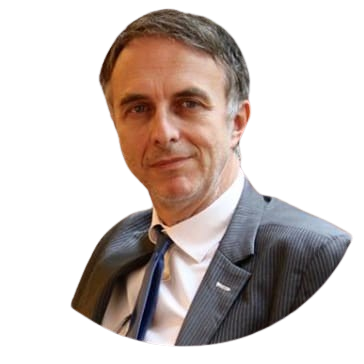
He did not say gather to exchange information. He said to receive influences. This is what Dr. Paret does in every group he conducts: helping people create synergy and develop each person’s potential through mutual influence.
The distinction is enormous. What happens in a meeting does not depend primarily on the content transmitted — it depends on a field that forms between the people present. This field can strengthen or weaken the inner state of each person, regardless of what is said. Indeed: what is said is received according to the field.
Understanding this mechanism opens new paths. Neuroscience has today given a precise name to part of it: co-regulation. The autonomic nervous system of every individual is in constant dialogue with that of the people nearby, reading and responding to subliminal signals — posture, breathing, muscle tone, gaze — that travel below the threshold of language.
The field of a meeting is literally a field of nervous systems in resonance. And this is why we hold meetings: because the whole is greater than the sum of its parts. We would not hold meetings if it were not to obtain more than each person can give individually. But at this point it is necessary to make precise distinctions — because the capacity to make distinctions determines results.
Who Guides the Field Determines Everything
When a group produces real effects, there is a person who does not merely teach — who embodies the field they wish to create. Their presence and their capacity to embody knowledge or the direction of the group must be a model. Therefore, even before content, comes sensitivity: the capacity to read the group, to feel its state, to bring one’s own nervous system to where one wants to bring others.
Stephen Porges’ polyvagal theory confirms this in biological terms. When the nervous system of the guide is in a state of regulation — calm, present, grounded — the group tends to biologically reflect that state. Collective stress decreases. The capacity for elaboration expands, because a group constituted with trust allows the release of defensive structures that consume energy and produce stress. People become more open, more creative, more available to change.
When instead the guide is tense, scattered, in survival mode — even if they say the right words — the group perceives it. Not with the mind. With the body. And the field closes.
This explains why certain meetings with technically prepared speakers leave little behind. And others — even without slides, even in small groups — produce transformations that last years.
The Group as a Synergic Magnetic Chain, Not as an Indistinct Crowd
We use the image of the magnetic chain. A well-formed group is not a mass of individuals sitting in the same place. It is a chain — each link connected to the previous and the next, each sovereign in its own strength, all oriented in the same direction. This is why the expression magnetic.
In neuroscience this structure corresponds to what happens in highly cohesive groups: the nervous systems of members progressively synchronise on the frequencies of whoever guides the field. Research on inter-brain synchronisation shows that in well-guided groups the brain waves of participants tend to converge — a measurable phenomenon, not a metaphor.
Some speak of an egregore — a form that goes beyond the individual and in turn influences the individual. In Dr. Paret’s groups people sometimes reach in a short time insights that would otherwise take years.
The states to cultivate — in scientific terms — are: collective safety, internal trust among individuals, shared objective even if each carries part of it, respect for others and indeed curiosity and positive attention for each person. A connection that synergically amplifies the whole.
The chain works when every link is stable. A single element in a state of alarm can propagate its own dysregulation to the entire field. A single element in a state of deep calm can instead stabilise those nearby.
Transmitting Does Not Exhaust. It Amplifies. The Brennpunkt.
There is a widespread fear among those who guide groups: that of burning out. Of giving too much. Of leaving exhausted after an intense day with many people.
Mesmer responded to this fear with the concept of Brennpunkt — the focal point from which transmission departs. This point suffers no loss in transmitting. It is like a fire that transmits without taking anything from its origin. It is like a string that makes other strings resonate without losing its own tone — indeed, it multiplies it.
The condition is one alone: that the Brennpunkt be authentic. That the guide is not exerting an effort — but radiating a state, something genuinely felt.
When transmission arises from effort, it tires. When it arises from state — from what one genuinely feels — it energises. The difference is not in the content. It is in the origin.
What Makes an Assembly Transformative
Bringing together Mesmer and contemporary neuroscience, a precise map emerges.
The way of feeling of whoever guides creates the field. Even before words, even before technical competence. A nervous system in regulation creates the biological conditions in which others can receive, elaborate, change.
The group needs orientation, not instructions. Information is available everywhere. Orientation — the quality of the state towards which the field moves — is not found in books. It is received in presence.
Physical presence is irreplaceable. This is why we naturally prefer to meet rather than telephone, even when the content would be identical. The primitive nervous system needs to read the other — their gaze, their posture, the density of their presence. Zoom is already a compromise. The room is irreplicable.
The field closes through reciprocal connection. Not the performance of the speaker — but the quality of the field that forms among all those present. Every participant contributes. Every nervous system in regulation strengthens the collective field.
Dr. Paret has not only been initiated in these matters from a magnetic point of view — he has also updated them to the most modern neurosciences and to field experience. He has studied with the best, compared different traditions, built a methodology that makes transmissible to all what was once reserved for few.
Mesmerismus® is not a school of communication. It is the documented heir of a practical tradition of transformation that knew — long before neuroscience — that the collective field is real, measurable in its effects, and governable by whoever can carry it in the body before the words.
Do you want to transform your groups and meetings — in companies, classrooms, studios?
Contact Dr. Paret to discover how it applies.
Dr. Marco Paret — Mesmerismus® — marcoparet.com
