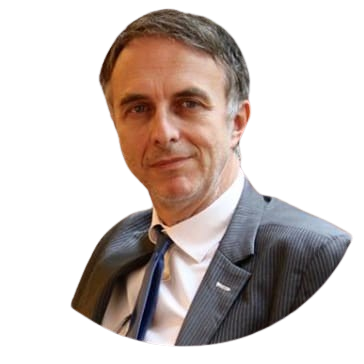
Prof. Erminio Di Pisa was one of the great Italian hypnotists of the twentieth century: he worked with the gaze alone, eyes open, on people who stayed fully awake. Prof. Dr. Marco Paret was his direct student, which is why his art is still taught today, live, as well as remembered.
It all began with a test Di Pisa ran on himself. In 1973, in Milan, at a friend’s house, he agreed to submit voluntarily to the hypnotic power of Dante Caravelli, a famous medium, in order to find out for himself whether hypnotism was real. He stayed apparently awake and kept, as he later wrote, «la perfetta coscienza di tutto ciò che provavo» — the full consciousness of everything he was feeling; and yet, despite a deliberate resistance, he felt upon himself «lo strano ascendente del maestro», the strange ascendancy of the master [1]. From that evening his life had a single aim: «studiare! sapere!» — to study, to know.
Anyone who assumes that a man awake and conscious is therefore outside hypnosis finds the sharpest answer here: the waking state held, consciousness held, the will put up its resistance, but the effect arrived all the same.
- Who Erminio Di Pisa was: hypnotist, astrologer, esotericist.
- Where the hypnotist actually looks: the secret of the root of the nose.
- The book written to keep a promise to a dead master.
- Stars, symbols and initiation: the other search of the same man.
- Donato, Caravelli, Di Pisa, Paret: four bonds of different kinds.
- What today’s research says about gaze and wakefulness.
- Two exercises of Di Pisa you can begin tonight.
- The legacy: where this art is still alive.
Who Erminio Di Pisa was: hypnotist, astrologer, esotericist
Di Pisa was a hypnotist and hypnologist, an astrologer, an esotericist, and a man initiated into the mysteries of Freemasonry. A reader of his book meets all these dimensions in the same volume, because for him Fascination belonged to a wider search into human faculties.
He practised hypnosis in three different situations, and each one asked a different competence of him. In front of a large audience, in crowded halls, he worked with collective hypnosis. Through radio and television he reached people who stayed at home, and there the voice had to stand in for physical presence. In the direct encounter with a single person, everything was decided by the gaze, and this is the situation that left the deepest legacy to our School.
In his writings the tradition of collective hypnosis appears as three names side by side, «metodi Webb, Ceccarelli, Di Pisa»: he belonged to a recognised line and said so openly. His book also preserves the transcript of Ceccarelli’s tape at the Regio in Parma, from 1978 [2].
Di Pisa further recounts that Caravelli died on 29 June 1977, having written down the date of his own death a fortnight earlier. The claim belongs to his account, and stays attached to the man who reports it [1].
Where the hypnotist actually looks: the secret of the root of the nose
His technical instruction overturns what the public imagines [2]:
«Quando l’ipnotizzatore fissa un soggetto, non pensiate che lo guardi negli occhi, dirige il suo sguardo alla radice del naso, fra i due occhi e li mantiene fissi e fermi, evitando qualsiasi battito di palpebre. È il soggetto che deve guardare l’operatore negli occhi.» — When the hypnotist fixes a subject, the operator directs his gaze to the root of the nose, between the two eyes, and holds it still, avoiding any blink. It is the subject who looks the operator in the eyes.
The exchange is therefore asymmetric: the subject looks into the operator‘s eyes, while the operator holds his own gaze on the point between the eyebrows. This asymmetry produces a precise effect. The operator is spared from chasing the other person’s eye movements and keeps a stable fixity; the subject receives a gaze that stays steady upon him, and that steadiness reaches him as safety.
On the control of the eyelids Di Pisa is both demanding and honest. He reports that some authors hold that any blink of the hypnotist cancels the effect already produced, and immediately asks: «Esagerazione?» — an exaggeration? The claim he hands to his student is more measured: in his direct experience a fixed and determined gaze makes the result quick and reliable.
His work holds two speeds together. The slow techniques inherited from Caravelli accompany the subject by degrees. The fast, instantaneous techniques, which he developed himself, obtain the effect in seconds [2]. Holding both greatly widens the operator‘s range, because it lets him answer different subjects and different tempos.
The central channel of this work is visual, and it belongs to the family of Fascination. Speech can accompany and support it — in his television induction, for instance, the voice guides a mental image — and remains a support, while the gaze carries the main weight. In our teaching these elements work together: the operator‘s inner state feeds the steadiness of the gaze, and a gaze so sustained reaches the subject, who answers. The hypnotic gaze we teach today descends from this practice, and the inner condition that makes it possible is described on our page on zero mind.
The book written to keep a promise to a dead master
Caravelli wished to publish a complete practical course of hypnosis, and death reached him first. Di Pisa took that task upon himself and wrote L’Ipnosi dalla A alla Zeta — Corso di Ipno-Magnetismo Pratico, a book carrying two souls: the master’s slow techniques and the student’s instantaneous ones [2]. It is one of the founding texts of the Italian hypnotic tradition and one of the declared sources of the Paret Method.
The volume runs through: the exercises of training and development of personal magnetism; hypnosis in the waking state, which he calls partial; complete hypnosis and the methods for producing it; hypnosis by mechanical devices; the classical states of catalepsy, lethargy and anaesthesia; stigmatisation and ecstasy; hypnosis on animals; hypnosis in medicine; physical magnetism with hypnosis at a distance; the techniques of doubling; the foretelling of the future; the hypnotic techniques of the great masters; hypnosis applied to selling and commerce; and finally astrology, diet and precious stones in the service of magnetism [2].
Among the most original chapters stands the television induction, designed above all for children: a small metal pendulum held just above the eyelids brings the eyes closed, then the voice switches on an imaginary television set and runs a comic film on it, until the film ends and sleep arrives. Another chapter describes hypnosis at a distance by radio, with a principle in five steps: describe the effect, state that it will be obtained, warn that any attempt to react will make it stronger, state that the effect comes by degrees, state that at the count of three it will be complete [2]. The photographic archive of the volume is kept by ISI-CNV [3].
Stars, symbols and initiation: the other search of the same man
Di Pisa was initiated into the mysteries of Freemasonry, and he left a written trace of his inner search: the essay Some Thoughts on Esotericism, composed in English and published in The Master’s Jewel, a collection of international Masonic writings. The signature at its foot, «Bro. Erminio Di Pisa, Italy», documents that membership [4].
In the essay he distinguishes two currents of occultism. On one side the schools of a magical kind, which pursue particular powers by any means, and include the rites of witchcraft. On the other, the schools of religious and philosophical orientation, turned toward the knowledge of supreme truths: the only ones, he writes, that concern Freemasonry. For him esotericism is the search for the transcendent truth that symbols keep, and it opens the possibility of mastering, through the right practice, faculties able to alter psychic activity in depth [4].
This side of his life also lights up his hypnosis. Astrology, diet and stones appear in his book alongside the exercises of the gaze because the man who wrote it was looking for a wider order behind the visible phenomenon. The same seriousness returns in our practice: the power of a method makes the moral quality of whoever wields it even more important, and these techniques are taught only to those who undertake to use them for the good of the person in front of them.
Donato, Caravelli, Di Pisa, Paret: four bonds of different kinds
These four names are often lined up as though they formed a single chain. In fact the bonds that link them are of three different kinds, and it is worth saying so precisely.
- Donato is a declared model. Di Pisa named him as his reference for eyes-open hypnosis: he studied him through his fame and his methods, at second hand [2]. Donato, that is Alfred-Edouard D’Hont, brought hypnotism before a vast public in the nineteenth century.
- Webb and Ceccarelli mark a recognised line. The formula «metodi Webb, Ceccarelli, Di Pisa» places his work inside an existing tradition of collective hypnosis, to which he felt he belonged.
- Caravelli taught Di Pisa in person. They worked together directly, and from that relationship came the slow techniques that later entered the book [1][2].
- Di Pisa taught Marco Paret in person. Paret was his direct student, and has continued and developed that work [1].
Personal teaching is the closest of the three bonds, for a practical reason: master and student work in the same room, the master watches how the student holds his gaze and places his body, and corrects in the very instant the mistake happens. A book transmits the instructions; presence transmits also the measure, the timing and the confidence, which are learned by watching someone who has them.
From Di Pisa’s fixation and gaze techniques comes the Ball of Light of the Paret Method. Pure direct Fascination, in Donato’s tradition, Paret then developed as a further and more advanced level [1]. The long history of this path is on our page on the history of mesmerism.
What today’s research says about gaze and wakefulness
The 1973 testimony belongs to history, and its evidence lies in the texts cited above. Contemporary research adds three interpretive frames, which we keep as correlates and hold apart both from the source and from our own reading as a School.
- Wakefulness belongs to hypnosis. The experimental literature describes hypnotic responses with consciousness present and alert, and places at the centre the subjective sense of volition: the responder experiences the event as something that happens by itself, while staying awake [5]. This answers the objection «he was awake, therefore he was free of any influence».
- A live gaze activates the body. Psychophysiological studies of eye contact measure effects on attention and autonomic arousal when the gaze is mutual and real [6]. They support the social force of the gaze; Fascination remains a matter of practice.
- Two brains looking at each other synchronise. Using fNIRS hyperscanning, Hirsch and colleagues observed functional synchronisation within and across brains during live eye-to-eye contact, compared with gaze directed at a pictured face [7]. We hold it as a relational correlate, far from a complete causal explanation.
Two exercises of Di Pisa you can begin tonight
Both come from his Corso di Ipno-Magnetismo Pratico [2], and we give them in their historical form with the prudent adaptation we advise today.
One. Fixation on a point. Set a room in half-light and fix a point placed at eye level, at the distance where your gaze rests easily. Hold your eyes still as long as you can, reducing the blink, and repeat the practice daily. Di Pisa speaks of about a quarter of an hour; begin with two or three minutes and climb by degrees, and as soon as the eye stings or waters, close it and rest, since daily constancy carries further than one long trial.
Two. The full-length mirror. Stand alone before a mirror that reflects you entirely. Speak a suggestive formula, imagine before you the subject who listens, and accompany the words with the gestures that come naturally. Try different formulas and gestures, then keep the one that feels most your own. This exercise trains gaze, voice, gesture and imagination together, and prepares the moment when a real person stands before you.
A bridge. For a quarter of an hour a day hold your attention on a single object, whichever it may be. It is the doorway to zero mind, the inner state from which Fascination draws its force, and it teaches the mind the steadiness that the gaze then transmits.
The legacy: where this art is still alive
Di Pisa left a verifiable method, a book that lets anyone go back to his own words, and a student who carried the work on. Marco Paret teaches that gaze today in the MESMERISMUS® training, live, with the immediate correction that only presence makes possible, and he has developed the further levels of this work.
Demonstrations are on our channel, youtube.com/@neurolinguistic. Learn eyes-open hypnosis where it is still alive: beside the man who received it directly from the hands of Erminio Di Pisa.
Notes and references
- ISI-CNV, School wiki, entry Prof. Erminio Di Pisa — Ipnosi con lo Sguardo — the preface with the 1973 meeting in Milan, Caravelli’s death as reported by Di Pisa, the direct transmission to Marco Paret and the origin of the Ball of Light.
- Di Pisa, E. L’Ipnosi dalla A alla Zeta — Corso di Ipno-Magnetismo Pratico; ISI-CNV wiki entry on the volume: full structure, the root-of-the-nose technique, the chapter on the eyelids with the question «Esagerazione?», the television induction, the five steps of the radio method, the Webb-Ceccarelli-Di Pisa triad, the transcript of Ceccarelli’s tape at the Regio in Parma (1978), the fixation and mirror exercises.
- ISI-CNV, Gallery: photographic archive of Prof. Erminio Di Pisa’s book.
- Di Pisa, E. «Some Thoughts on Esotericism», in The Master’s Jewel — Masonic Education, signed «Bro. Erminio Di Pisa, Italy»; ISI-CNV wiki entry on his esoteric and Masonic dimension.
- Kihlstrom, J. F. «Neuro-hypnotism: prospects for hypnosis and neuroscience», Cortex, 49(2), 2013; Terhune, D. B., Cleeremans, A., Raz, A. & Lynn, S. J. «Hypnosis and top-down regulation of consciousness», Neuroscience & Biobehavioral Reviews, 81, 2017.
- Hietanen, J. K. «Affective eye contact: an integrative review», Frontiers in Psychology, 9:1587, 2018.
- Hirsch, J. et al. «Frontal, temporal and parietal systems synchronize within and across brains during live eye-to-eye contact», NeuroImage, 157, 2017, 314–330.
In the MESMERISMUS® of Prof. Dr. Marco Paret this heritage is taught as an art of self-knowledge, communication, wellbeing and personal growth. Medical and psychological matters belong to the professions that govern them.
