The awakening that is not an awakening
It is four in the morning. The alarm has not rung, no noise has broken the silence, and yet the eyes are already open, fixed on the darkness of the ceiling. The body is there, lying down, but not rested: the jaw clenched, the shoulders that do not yield to the mattress, the short breath of someone waiting for something that never comes. You toss and turn, you seek a position, you move the pillow, you pull the duvet. Nothing. Light sleep has snapped like a dry branch, and the mind, instead of falling silent, begins to list everything that will have to be done, said, resolved. Do you fall back asleep? Perhaps. But when the real alarm rings, the feeling is that you never closed your eyes at all. And the day begins already tired.
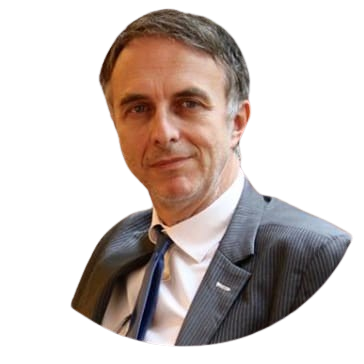
Prof. Dr. Marco Paret presents a live demonstration of hypnosis, offering a clear view of its practical application in this video.
Prof. Dr. Marco Paret presents a live demonstration of hypnosis, offering a clear view of its practical application in this video.
Prof. Dr. Marco Paret presents a live demonstration of hypnosis, offering a clear view of its practical application in this video.
Prof. Dr. Marco Paret presents a live demonstration of hypnosis, offering a clear view of its practical application in this video.
If you recognized yourself in these lines, know that you are not alone. There is a way to address the issue at its root, without forcing sleep, without counting sheep, without relying solely on chemistry. There is a method that starts from a simple and ancient observation: sleep is a letting go. And learning to let go can be done. Prof. Dr. Paret, who for decades has studied and taught the dynamics of magnetism and hypnosis, has dedicated an important part of his work precisely to this topic. What follows is a journey through his words, his stories, and his techniques, to understand how one can return to sleeping properly.
The story of the baker
Prof. Dr. Paret often tells an anecdote that illuminates better than any theory the link between sleep, habit, and trauma. “A story I often tell is that of the baker. This person was a baker by profession and was used to waking up at four in the morning — because as a child, if he didn’t get up at four, they would hit him with a stick. So, suddenly, at four o’clock he would wake up.”
The mechanism, he explains, worked as long as the profession was that one. “It worked fine as long as he was a baker; but by then he worked in a shopping center, where he didn’t even make the bread: he only sold it. And yet he had maintained the same pattern.” The body had learned an ancient lesson, and continued to repeat it even when it was no longer needed. The problem, however, was not only the awakening at dawn. “The problem is that, waking up at four, by nine in the evening he already went to bed, and therefore he had little social life, because people often see each other precisely after nine.”
Social life reduced to a minimum, the evening ending before it begins, the sense of exclusion from everything that happens after dinner: this was the price he paid every day. And the solution? Prof. Dr. Paret worked on the cause. “I resolved it in a single session: I helped him overcome the trauma — because it was a trauma, what had happened to him — and then I had him work on some imaginative elements, so that in the end he slept perfectly.”
A single session. The trauma was recognized as such, addressed, and overcome; the imaginative elements allowed the brain to build a new image of sleep; and the result was immediate. The story of the baker is exemplary because it shows that sleep is also a matter of personal history, of memories that have become embodied and continue to dictate the rules.
Hypnos: the name itself comes from sleep
There is an etymology that says much more than it seems. The word hypnosis derives from Hypnos, the Greek god of sleep. And Prof. Dr. Paret emphasizes this closeness with a clarity that leaves no room for doubt: “Hypnosis is a bit like sleeping: the word itself, hypnos, comes from sleep.” It is a common root that indicates a similar disposition of the human being.
Sleeping is letting go. Hypnosis is letting go. The difference lies in the intention and the direction, but the inner movement is the same: abandoning control, entrusting oneself to something that is not the conscious will. This is why, continues Prof. Dr. Paret, “hypnosis in general helps everyone, because hypnosis is letting go — and sleeping is also letting go. So, by learning to let go, you actually also learn to sleep.”
This is the keystone. Those who have difficulty sleeping are often those who cannot let go. The mind continues to work, to control, to keep watch. And the body follows. But there is more: “In general, people who follow our courses feel better and experience sleep better. How they get there varies from person to person: there are various types of personality, and sometimes it is the personality that keeps you awake.” There is, however, a common principle: learning to let go, and doing so with the right guidance.
Those who struggle to sleep sleep tense
Let us come to the point. Why does Prof. Dr. Paret insist so much on the body when speaking of sleep? The answer lies in an observation he has repeated on many occasions: “Most people who struggle to sleep sleep tense: the body remains tense, the body cannot let go.”
It is a matter concerning the body, more than the will. Residual muscle tension, breathing that remains shallow, the jaw that does not release: these are signs that the nervous system has remained in a state of alert. And in that state, deep sleep does not come. You sleep, yes, but with one foot in wakefulness, ready to spring.
And here magnetism comes into play. “Magnetism helps well in contact with the body — and contact with the body is one of the fundamental elements for being able to resume sleeping.” It is about re-establishing contact, a perception, a presence. Hands that approach the body, that follow its contours, that transmit a sensation of warmth and calm: all this speaks directly to the nervous system, which receives a clear message: you can lower your guard, you can let go of your grip.
Prof. Dr. Paret has devoted important pages to the role of hands and plexuses in this process. In his work, he explains how the sensory pathway of magnetism passes precisely through the hands and nerve centers: an approach that translates into precise gestures, taught and practiced. And for those who wish to delve deeper, the topic is treated extensively in his writings and courses, where one learns to use the hands as an instrument of rebalancing and contact.
Another physiology of sleep
There is a common notion that should be debunked: that sleeping a lot is equivalent to sleeping well. Prof. Dr. Paret overturns it with an observation that sounds counterintuitive, but which experience confirms: “In reality, those who sleep a lot sometimes sleep badly: sleeping badly, they need to sleep a lot, but the sleep is very light, and they wake up too easily — they perhaps only get the first four hours, which are the easiest, but then they cannot stay in a restful sleep, and sometimes they wake up feeling bad.”
The first four hours are those in which the body gives in most easily, those in which the fatigue accumulated during the day prevails. But afterwards, when sleep should deepen, something jams. Sleep becomes light, fragmented, populated by awakenings. And in the morning, the feeling is that nothing has been recovered. This is why the number of hours is not the right indicator. The right indicator is quality, depth, the ability to descend into that state in which the body truly regenerates.
“With our techniques, on the other hand, one descends even more deeply: it is truly another physiology that is created, more natural.” This is what Prof. Dr. Paret observes in his students. And the result is surprising: “Sleeping better helps us; and we also teach techniques with which people sleep less time and have more energy during the day: they can sleep even just five hours and be fully energetic.”
Five hours. Not eight, not nine. Five hours of deep, true, regenerative sleep. And a day full of energy. This is the paradox that common physiology struggles to explain, but which the practice of magnetism and hypnosis encounters regularly. It is about allowing the body to sleep better, so deeply that the necessary time naturally reduces.
Lethargy and sleep
Prof. Dr. Paret uses a term that deserves attention: lethargy. In the technical sense of a state of suspension, of profound slowing down. And he places it alongside sleep with a simile that illuminates: “Lethargy and sleep are in a similarity with each other — so much so that sometimes it is good to tell the person that they will also sleep very well.”
Why is this similarity important? Because those who practice self-hypnosis learn to enter a state that resembles sleep, but which is guided, conscious, voluntary. And this ability transfers to nighttime sleep. “When one practices self-hypnosis, one actually sleeps more deeply and recovers in less time: one can sleep even just five hours and be perfectly relaxed.”
The practice of self-hypnosis, therefore, is a training that teaches the body and mind to descend into depth. And those who have learned to descend into depth during wakefulness can also do so during the night. Sleep becomes denser, more compact, more restorative. And the necessary time shortens.
This is one of the points that Prof. Dr. Paret develops in his courses and writings, where he explains how states of non-verbal hypnosis are accessible to everyone and how they can also be used to improve nighttime rest. Lethargy, far from being a problem, becomes a resource: the ability to slow down, to suspend, to let go.
What to do tonight
Let us come to practice. What can one do, as early as tonight, to begin changing one’s relationship with sleep? Prof. Dr. Paret is very concrete. “The first rule is to avoid stimulating topics and use the bed for sleeping: avoid working in bed and doing other things.” The bed must become a specialized place: you sleep, and that’s it. No laptop, no phone, no TV series until late. The brain must associate the bed with sleep, not with wakefulness.
Then there is self-hypnosis. “Then learn self-hypnosis: little by little, practicing every day, you will learn to sleep better.” Daily practice, even brief, creates a deep habit that transfers to nighttime sleep. And then there are specific techniques.
One of these is that of magnetic passes, an ancient gesture that Prof. Dr. Paret has brought back into vogue in his method. “The passes, and the self-treatment of the plexuses, can give excellent results for sleeping.” These are slow, repeated movements that accompany the body toward relaxation, passing over the main nerve centers. It is a technique that is learned, practiced, and becomes part of one’s personal repertoire.
And then there is a technique that Prof. Dr. Paret uses in his work and has described on several occasions: the “let’s sleep, let’s sleep.” You look at the person thinking let’s sleep; the eyelids blink once, then twice, then three times, and when the eyes close, the person is already half-relaxed. It is an example of how non-verbal hypnosis can be used to accompany someone toward sleep, but also of how one can learn to do it with oneself, with the necessary modifications.
The mistake of those who try too hard
There is a mistake that Prof. Dr. Paret sees being made often, and it is that of those who seek sleep with too much determination. “Sleep is an unconscious activity: the more you try to do it consciously, the more difficult it becomes. It is better that you learn self-hypnosis, so you can entrust it to your unconscious.”
This sentence deserves to be read twice. Sleep is an unconscious activity: it does not depend on the conscious will. The more the conscious mind tries to control it, the more it drives it away. It is like trying to fall asleep thinking “I must sleep, I must sleep”: the result is that you stay awake. The solution is to learn to leave the task to the unconscious. And self-hypnosis is exactly this: a way to communicate with the unconscious, to entrust it with the task.
This also explains why generic relaxation techniques often are not enough: they stop at the conscious level, at the level of the will. Self-hypnosis goes deeper, reaching that layer of the mind that governs sleep and that can, if adequately instructed, produce deep and regenerative rest.
Sleep in historical documents
The tradition of magnetism has always had a close relationship with sleep. The nineteenth-century documents that Prof. Dr. Paret willingly cites are precious testimony to this. In the minutes of the commissions that studied magnetic phenomena, one reads:
«Le passage de l’état de veille à celui que l’on appelle le sommeil magnétique.»
“The passage from the waking state to what is called magnetic sleep.”
— nineteenth-century minutes of a commission, historical collection of the Library
Magnetic sleep was considered a specific state, distinct from common sleep, but related to it. And the chronicles of the era report clinical observations of great finesse:
«Après quelques instants d’un sommeil réparateur, Théodula parut s’inquiéter.»
“After a few moments of restorative sleep, Théodula seemed to become anxious.”
— nineteenth-century chronicle, historical collection of the Library
Restorative sleep as a current observation of magnetists: a clinical finding, repeated in dozens of reports. And the theoretical treatises of the era pushed the analysis even further:
«Envisageons dans tous ses points ce sommeil magnétique: l’action que j’occasionne chez le dormeur se joint à celle de son âme et en augmente toutes les facultés.»
“Let us consider in every point this magnetic sleep: the action I produce in the sleeper joins that of his soul and increases all its faculties.”
— nineteenth-century treatise on magnetism, historical collection of the Library
These quotations show that the link between magnetism and sleep spans the centuries. And Prof. Dr. Paret gathers and develops it: “All the treatises on magnetic sleep are very good, also because one works with magnetic passes and proceeds to making contact with the body.” The tradition is alive, and in the contemporary Paret Method it finds a new expression.
What improves when you sleep well
If there is a question people ask themselves, it is this: what is the real use of sleeping well? Prof. Dr. Paret has an answer that embraces everything: “Everything improves, because sleep improves everything: any activity we do during the day. Sleep is the moment in which we prepare ourselves, from a certain point of view, for the day that comes after.”
It is preparation. It is the moment in which the body and mind organize themselves for what will come. And when sleep is deep and regenerative, the effects are seen in every area. “Relationships improve, health, well-being; with better health, relationships also improve; and people manage to have more ideas. Everything improves.”
Relationships, health, ideas. Quality sleep is a foundation. Those who sleep well are more patient, more lucid, more creative. Those who sleep well have more energy to dedicate to others and to themselves. Those who sleep well face the day with a reserve of resources that those who sleep poorly barely know.
Prof. Dr. Paret, with his method, offers the tools to achieve this result. He teaches an ancient and ever-relevant art: that of letting go, of entrusting oneself to one’s unconscious, of coming into contact with one’s body. And sleep, that deep and restorative sleep that everyone seeks, arrives as a natural consequence.
Those who wish to go further find in Prof. Dr. Paret’s live seminars — where he teaches these techniques throughout the world — the part of the work that a page can only indicate: the guided relaxation of the body, the passes given and received, self-hypnosis built to measure. Many students recount having rediscovered in a few days a sleep they had been chasing for years. The courses are organized by the Université Européenne.
Frequently asked questions
**How long does it take to see the first results?**
Prof. Dr. Paret observes that responses vary from person to person. Some students notice improvements within the first weeks of practice, others need more time. Consistency is the decisive element: practicing every day, even for a few minutes, builds results that consolidate over time. The story of the baker, resolved in a single session, is an example of how sometimes little is enough; but it is also true that that little came after years of suffering.
**Does it work if I take sleep medication?**
This is an important question, and Prof. Dr. Paret’s answer is clear: “Even if one is currently taking sleep medication, this does not prevent learning hypnotic techniques in conjunction; then, over time and each at their own pace, the one can come to accompany the other — naturally.” It is essential, however, to emphasize that any modification of ongoing therapies must be decided exclusively with one’s own doctor. The techniques described here speak of well-being and do not replace medical care.
**What if I wake up in the middle of the night?**
Nighttime awakenings are frequent, especially when sleep is light. Prof. Dr. Paret teaches that the practice of self-hypnosis helps one descend more deeply, and makes awakenings less likely. And if an awakening happens, the ability to let go, trained during the day, allows one to fall back asleep more easily. The body has learned to descend into depth, and can do it again.
**Do I need a special talent?**
No. Hypnosis and magnetism are abilities that are learned, not innate gifts. Prof. Dr. Paret often repeats that anyone can learn to let go, with the right guidance and consistent practice. Only the will to learn and the consistency to practice are needed.
—
Sleep is an art. And like all arts, it can be learned.
Notes and scientific references
- Walker M. P., van der Helm E., Overnight therapy? The role of sleep in emotional brain processing, «Psychological Bulletin», 135(5), 2009, pp. 731-748. doi:10.1037/a0016570 — sleep participates in the nighttime processing of emotions: the day, as Prof. Dr. Paret observes, is prepared in sleep.
- Porges S. W., The polyvagal perspective, «Biological Psychology», 74(2), 2007, pp. 116-143. doi:10.1016/j.biopsycho.2006.06.009 — theoretical framework on states of quiet and recovery regulated by the vagus nerve; a model discussed in the literature, referenced here as an interpretive key.
- Cordi M. J., Schlarb A. A., Rasch B., Deepening sleep by hypnotic suggestion, «Sleep», 37(6), 2014, pp. 1143-1152. doi:10.5665/sleep.3778 — in the laboratory, pre-sleep hypnotic suggestion increased the proportion of deep slow-wave sleep.
