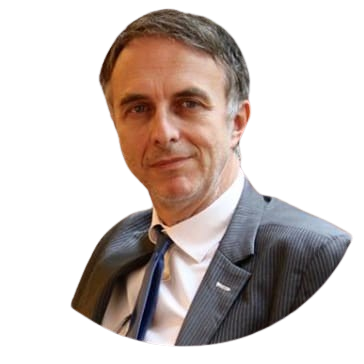
Integral Presence: Personal Magnetism is the First Level, on the Path to Awakening
Have you ever noticedHave you ever noticed that the first time you are in a new place, you often seem to have more impact? The second time, the effect fades. And have you ever met someone and felt a particular sensation, a force you cannot explain? It is likely that that person, at that moment, was more present.
The tradition of our School finds an interesting parallel in the Indian tradition, where along the path to awakening one encounters the siddha, the powers — sometimes considered magical in the tradition — that develop along the way; personal magnetism is one of these, the first level of integral presence and not its destination. Those who cultivate presence naturally develop this attractive force, without forcing it or seeking it as an end in itself. As one progresses, presence becomes increasingly integral, and magnetism transforms from an external appeal into a silent rootedness that welcomes rather than dominates. It is a gradual path, where each step leads to a fullness that becomes interior and is lived ever more deeply.
Presence is the quality that allows us to live the moment fully, and it transforms every interaction into a concrete opportunity. In real life, as Prof. Dr. Marco Paret explains, it serves to communicate better with a person: whoever is present truly listens, grasps nuances, and responds with precision, thus avoiding misunderstandings. It also serves to withstand difficult news without collapsing or being overwhelmed by emotion, and it maintains clarity to decide the next step. Consider a manager inundated with messages and stimuli: only those who remain present can follow every request without losing the thread, filter out background noise, and act effectively. In these situations, presence becomes an operational tool that improves the quality of relationships and choices.
Presence is a concrete, trainable capacity that changes the way others perceive you — and much more. This article explores the phenomenon, its historical roots, and its deeper potential.
Presence is attractive force
“When a person is present in a room, or even an interlocutor, I am perfectly aware of it. By increasing presence, the reaction of the people around me changes, because presence is attractive force.” This is how Prof. Dr. Paret describes the first effect, the one that is noticed immediately.
Presence is really a matter of magnetism — but presence also goes beyond magnetism: personal magnetism is the first level. This capacity develops naturally when you work with presence; then presence becomes increasingly integral, and the more integral it becomes, the more you reach ever greater levels.
Research shows that a person’s internal state measurably influences those nearby. It is physiology. When you are present, your nervous system communicates something precise — and the other person receives it, often without words.
What happens if this capacity is taken to its highest level? Prof. Dr. Paret’s answer touches a point that few expect.
The further step: a path of awakening
“Presence is a path of awakening. It is also said: whoever works on presence already has one foot in awakening.”
This is a perspective that overturns many expectations. Here the word “awakening” is to be understood in its traditional sense: a state of awareness that no longer depends on circumstances. In the Indian tradition, the capacities that develop through working on presence are called siddha — powers that emerge as a natural consequence, not as a goal.
Few know this: this path is accessible, concrete, and begins with something very simple — the body. The journey requires only consistent practice and clear guidance.
The body reorganizes itself
“I fully confirm: presence is a state in which the body self-reorganizes. The spirit is in the body, because at a certain point you become conscious of your sensory map, and then you change completely.”
By practicing presence techniques, little by little something develops that is present within the body: and this goes beyond ordinary mindfulness.[1] Many people ask what the difference is between mindfulness and presence. Prof. Dr. Paret’s answer is clear yet respectful: “Mindfulness is very good, but it derives from Indian techniques that were also based on yoga, therefore on the relationship with the body — and this is often left somewhat aside. We, on the other hand, start precisely from the body, and with the body we manage to block thoughts, to change, to be more witnesses of ourselves.”
Attention to the body modifies the way one reacts to stress within a few weeks. You practice and you feel it: it is experience that speaks. It is a direct experience, verifiable by anyone.
How to train it
“There are various starting points for working on presence, but working on sensation is the key: the sensation of the body. The more points of reference we have, the better: attention to the breath, or feeling our center, certainly helps as well. But let us begin by feeling our sensations — physical sensations,[2] not emotions: one must learn the distinction between the two.”
A practical tip: “There are points of the body to start from, but it is also true that if we maintain attention on one point of the body — a hand, a foot — it will be much easier to progressively develop presence. A central point of the body, at the beginning, is sometimes more difficult: people get lost.”
The two mistakes
“Many people do presence and think they are doing it, but they are not. There are two types of mistakes. The first is doing tense presence: keeping the sympathetic system too activated, being too tense while doing presence. In reality it must be relaxed, because it is an activation of both the sympathetic and the parasympathetic systems. We can think that when you do things without effort, you are probably more present; if there is effort, you are less present.”
The second mistake is more subtle: “Wanting to control: I say ‘bring attention to the sensations,’ and some understand ‘control the sensations.’ No: feel the sensations, do not try to control them. Presence allows things to exist.”
Whoever remains calm in a tense room changes the room. This is the principle, and it is trained. The difference between “doing” and “undergoing” the practice lies precisely in this: presence is a state of listening, not of effort.
The mirror
“Standing in front of the mirror helps to increase presence: the mirror is a very good tool, because it makes us feel a different sensation, a sensation in the body that is very important.”
It is about feeling, more than looking at oneself. The sensation that emerges in front of the mirror is a precise point of reference, usable at any moment. It is a simple exercise, but it reveals much about how the body reacts to its own image.
A documented tradition
Prof. Dr. Paret’s school is rooted in an ancient Western tradition, that of magnetism. The historical texts of the Library preserve its fundamental principles:
«Le magnétiseur doit être calme, recueilli, et n’avoir d’autre pensée que celle du bien qu’il veut faire.»
— Nineteenth-century treatise on magnetism, historical collection of the Library
Transl: The magnetizer must be calm, collected, and have no other thought than the good he wishes to do.
«La volonté seule ne suffit pas: il faut encore l’attention soutenue.»
— Nineteenth-century practical manual, historical collection of the Library
Transl: Will alone is not enough: sustained attention is also required.
«Par magnétisme l’on ne doit pas entendre autre chose qu’une sorte d’équilibre de chaleur vitale que l’on cherche à établir entre deux individus.»
— Nineteenth-century pamphlet on magnetism, historical collection of the Library
Transl: By magnetism one should understand nothing other than a kind of equilibrium of vital heat that one seeks to establish between two individuals.
From this tradition comes the key that the School guards: a very clear path for developing presence. “We have a path: we are linked to tradition, we have a very clear path for developing presence. And we know this key can lead to all levels, up to awakening. It is a traditional key derived from alchemy: a key linked to a very ancient Western tradition, which was born in its time and is both powerful and current.”
What it is for every day
“If you are with a person and you are present, you will communicate better — and even if you are given bad news, you withstand it better. If you are a manager, with many messages arriving, you must necessarily be present in order to keep up: if you have many stimuli, you must be present. The other day I was speaking with a student, a senator, who told me she had a great many stimuli and had to maintain presence with respect to all these things. The present person manages to maintain presence in all situations.”
Presence is a tool for being in the world with greater clarity. For those who work with words — therapists, hypnotists, managers — it is the foundation that makes everything else more effective. To explore the relationship between presence and states of non-verbal hypnosis, or to explore how silence and rhythm act on communication, the path is laid out.
And for those who want to understand how all this applies to sales and leadership, the principle is the same: attract rather than convince. At the base there is always personal magnetism, the first level. The encyclopedic entry on non-verbal hypnosis offers a further synthesis.
During one of Prof. Dr. Paret’s seminars — who teaches presence all over the world — this work is done live: many report that it was the most useful course of their lives, because the change touches the very way of being. The courses are organized by the Université Européenne.
FAQ
How long does it take to notice the first effects? Most people notice a change in their calm and clarity within the first few weeks of consistent practice, even with just a few minutes a day.
Can it be practiced at work? Yes. Presence is carried with you: in a meeting, in front of a screen full of notifications, in a difficult conversation. That is exactly where it is needed.
What is the difference between mindfulness and presence? Mindfulness is very good, but it often leaves aside the relationship with the body. Here we start from the body: with physical sensation, thoughts are blocked and one becomes a witness of oneself. It is a different path, not a different value.
Is a particular talent required? No. Presence is a natural capacity that is awakened with the right practice. You do not need to believe it: you practice it and you feel it.
Are there any contraindications? Presence techniques are practices of bodily awareness. They do not replace medical or psychological treatment. For any doubt, it is always advisable to consult a professional.
Presence is the key that opens all doors. Prof. Dr. Paret’s school has guarded its path for over thirty years, with a clear and traditional route. If you feel that the time has come to go beyond words, the first step is simple: contact the School for an introductory conversation.
Notes and scientific references
- Farb N., Daubenmier J., Price C. J. et al., Interoception, contemplative practice, and health, “Frontiers in Psychology”, 6, 2015, art. 763. doi:10.3389/fpsyg.2015.00763 — review on the role of awareness of bodily sensations in regulating internal state.
- Porges S. W., The polyvagal perspective, “Biological Psychology”, 74(2), 2007, pp. 116-143. doi:10.1016/j.biopsycho.2006.06.009 — theoretical framework on the role of the vagus in regulating states of calm and social connection; it is a model discussed in the literature, cited here as an interpretive key and not as established fact.
