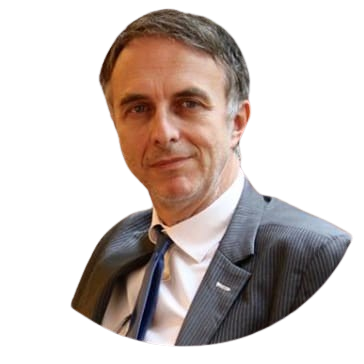
What do you actually learn in a MESMERISMUS® course? You begin by transforming your presence — both with yourself and others. This training enhances personal magnetism, develops the magnetic gaze and fascination, practices magnetic passes, and enables recognition of deep non-verbal responses such as catalepsy and the mesmeric crisis. The benefits are twofold: you gain greater inner stability and bodily awareness for personal development, and acquire a more precise ability to read and accompany change when working with others. Discover also the secrets of Fascination, a powerful technique of the School in which the eye itself becomes a means of change.
Magnetic passes, for instance, are practiced close to the body, often at a slight distance, allowing bodily response to become immediate feedback and giving the technique concrete meaning. The mesmeric crisis further highlights the non-verbal dimension: reactions can become markedly stronger than expected and may be experienced as a powerful release around long-standing patterns. This release can unfold gradually, without effort, emphasizing observation, feeling, and accompaniment as the process unfolds. While some phenomena can be illuminated through autonomic physiology, others open questions that merit deeper scientific investigation. Here is what students learn, how the path develops, and why MESMERISMUS® has a specific character today.
What you learn first in MESMERISMUS® training
The first block of MESMERISMUS® training transforms the student’s body and attention into a powerful instrument for learning. This supports both personal development and professional interaction, as students learn to notice their own inner state and another person’s responses.
- Personal magnetism and presence — Students practice centering, verticality, and breath to maintain a calm, stable inner state while the other person’s condition changes. This provides a reliable internal reference and a clearer sense of bodily presence.
- Fascination and the magnetic gaze — Fascination is a specific School technique focused on eye use. Students train for impactful visual contact, timing, and a quality of attention that strengthens the gaze, ensuring precise and responsive interaction. Before training, the gaze may feel uncertain; after practice, it becomes a reliable instrument.
- Magnetic passes — Structured hand movements, rooted in classical magnetic tradition, are practiced close to the body, even at a slight distance, while students follow physical responses. This immediately turns the body into a feedback source, refining sensitivity and timing.
- Deep states — Students use catalepsy, somnambulism, and lethargy as landmarks for self-exploration and recognizing qualitative changes in another person’s condition. Understanding these differences helps them choose the next action with precision.
- The mesmeric crisis — This essential training experience makes non-verbal bodily and emotional reactions unmistakable. Students learn to stay present, sense timing, and accompany a process that can bring a strong feeling of release and reorganization. Before this experience, the process may seem abstract; after it, the body knows the way.
MESMERISMUS® is fundamentally a relational art. Technique, sensations, the operator‘s inner state, and the subject’s responses remain in dialogue. Practical skill depends on both seeing and feeling: observing signals, sensing the moment, and choosing the next action based on what the body reveals. This gives you a distinct advantage: the ability to read and respond in real time, making the training both dynamic and engaging.
The mesmeric crisis: why it appears early in the training
The mesmeric crisis is introduced early in MESMERISMUS® training to vividly demonstrate the powerful effects that can occur before words are spoken. This experience is not a barrier; it is an opening to deeper understanding. Initiated through gaze, presence, and magnetic passes, the process can lead to bodily and emotional responses that sometimes exceed initial expectations. For learners, this non-verbal communication becomes a tangible experience with clear personal and practical implications.
Within the School’s framework, the crisis is examined in relation to long-standing patterns. Training focuses on feeling transitions, recognizing when the process intensifies, understanding timing, and observing how gaze, passes, and the operator‘s inner state contribute. Students gain practical skills for accompanying a powerful process with steadiness and precision.
Autonomic physiology and the polyvagal framework can partially explain observed shifts in activation, immobilization, and regulation. However, the observable sequence can sometimes be clearer than the complete mechanism. This gap is valuable: it teaches students to differentiate between what they can see and feel and what remains hypothetical, highlighting aspects of person-to-person non-verbal interaction that warrant deeper scientific exploration.
What makes MESMERISMUS® distinctive today
Animal magnetism and mesmerism form a major historical trunk from which modern hypnosis grew. While one branch of modern hypnosis emphasizes verbal suggestion, MESMERISMUS® focuses on the broader relational and non-verbal field. This includes the operator’s inner state, fascination and gaze, magnetic passes, bodily responses, deep states, and the mesmeric crisis.
In the historical accounts of magnetism the old magnetists often worked with few words and described phenomena that transcended the ordinary, which today appear far more rarely in the accounts of modern hypnosis: spontaneous healings, phenomena experienced as telepathic, responses shared with the operator and very intense crises. This shows at once that we are entering a field wider than verbal suggestion alone.
Why does this matter in practice? Students gain multiple channels for observation and training. Changes in breath, muscle tone, posture, gaze, or timing become valuable information. The operator‘s own sensations contribute to feedback, guiding the next action from the interaction itself. This sensitivity enhances both personal presence and professional work with others.
Autonomic physiology helps recognize shifts in activation and regulation, separating observation from interpretation. It offers a partial map of autonomic responses, connecting observable changes in breathing, muscle tone, and attention with one possible physiological framework, while leaving other aspects open to investigation. The remaining questions add intrigue: some person-to-person non-verbal phenomena are easy to observe, harder to fully explain, and merit deeper scientific exploration. Historical tradition shows the origins of these practices, direct experience reveals current outcomes, and scientific research continues to explore the how and why.
How personal magnetism, gaze and magnetic passes are trained
Training in MESMERISMUS® begins with cultivating the operator’s presence. Students develop verticality, breath, and inner steadiness, making these qualities second nature in interactions. The gaze is refined into fascination, characterized by calm, sustained contact with precise timing. Magnetic passes introduce a second channel, using structured hand movements to engage with the other person’s bodily responses.
«In our school we have experimented with all systems of magnetism and have seen that it is in fact possible to speed up the process of magnetism.»
«Nella nostra scuola abbiamo sperimentato tutti i sistemi di magnetismo e abbiamo visto che è in effetti possibile accelerare il processo di magnetismo.»
— Prof. Dr. Marco Paret
The focus is on accelerating progress through better preparation and clearer practice, rather than accumulating more procedures. Students transition between self-preparation and partner work, integrating gaze, passes, and state into a cohesive system.
«Firstly we must enter in the frame of mind that what we call magnetism is natural and soothing.»
«Innanzitutto dobbiamo entrare nella disposizione d’animo che ciò che chiamiamo magnetismo è naturale e lenitivo.»
— Prof. Dr. Marco Paret, History of Hypnotism, Animal Magnetism and Instant Healings
The School’s exercises on preparation and its demonstrations of mesmeric passes and fascination illustrate this practical sequence: prepare the operator, establish the relation, observe the response, and refine the action.
From Level 1 to Level 2 and Ultimate
Level 1 establishes the foundation for MESMERISMUS® training, focusing on personal magnetism, fascination, presence, gaze, and magnetic passes. Students learn to recognize classical non-verbal states, engage with the mesmeric crisis, and apply Lux Mind for enhanced concentration and solution-finding. The mesmeric crisis is a pivotal experience, allowing students to observe and accompany profound bodily responses.
Level 2 guides students into deeper states and more nuanced non-verbal communication. The curriculum includes ecstasy, demonstrations related to analgesia, and work on habits and addictions (food, smoking and similar patterns). In the School’s terminology, the mesmeric crisis and ecstasy represent distinct forms of work: the former addresses established patterns, while ecstasy explores a higher level of self-organization. These experiences can sometimes evolve beyond initial expectations.
Ultimate integrates trainer elements and material from older European traditions studied and transmitted by Prof. Dr. Marco Paret. Across all levels, the principle is embodiment through repetition. Just as learning to swim transforms unfamiliar movements into natural abilities, practice makes these skills increasingly intuitive and available. The training path is cumulative, building on each level rather than presenting isolated techniques.
Why live practice matters — and how online lessons support it
MESMERISMUS® is learned through direct interaction, making live seminars the cornerstone of practical training. During these sessions, students engage with each other under the guidance of experienced instructors. This allows the teacher to observe and refine the operator‘s posture, timing, gaze, and magnetic passes, while also monitoring the subject’s non-verbal responses. Students can feel the subtle shifts as they happen, gaining a deeper understanding of the techniques and enhancing their ability to respond effectively.
Online lessons complement live seminars by preparing students beforehand, clarifying the conceptual framework, and enabling exercise reviews between sessions. This ongoing support ensures that students return to live seminars with increased familiarity and insightful questions, allowing them to delve deeper immediately.
Both formats work together: the School’s online course with live lessons supports preparation and consolidation; live seminars provide supervised, hands-on practice.
The lineage behind MESMERISMUS®
The School’s MESMERISMUS® method is deeply rooted in the rich European history of animal magnetism, a foundational tradition from which modern hypnosis evolved. This historical lineage enriches the training, emphasizing the operator‘s preparation, the gaze, magnetic passes, and direct non-verbal interaction. Franz Anton Mesmer, a pivotal figure in this tradition, developed methods that prioritized direct experience, which remains crucial today as many elements were originally transmitted as practices before being reframed by later hypnotic theories. In the historical roots of magnetism there are precedents in Paracelsus, Fludd and in the secrets of the ancient alchemists; the School reads this line in continuity with even older roots, which it traces back to the ancient Egyptians and to practices regarded as sacred.
«Our Master Prof. Erminio Di Pisa used mainly the gaze to achieve his instant healings.»
«Il nostro Maestro Prof. Erminio Di Pisa si serviva principalmente dello sguardo per ottenere le sue guarigioni istantanee.»
— teaching of the School, recorded by Prof. Dr. Marco Paret
Prof. Dr. Marco Paret has organized this lineage into a structured teaching path, integrating historical sources with modern physiological models. This approach highlights the enduring significance of the gaze and its potential for rapid state changes, offering students a profound understanding of its application in MESMERISMUS®.
For those interested in exploring the historical background further, additional resources are available in A History of Mesmerism & Anton Mesmer. While the lineage provides valuable context, the training focuses on what students can actively practice and observe.
Who the training is for — and what certification means
The School welcomes individuals from diverse backgrounds, including natural therapists, helping professionals, managers, teachers, artists, and experienced hypnotists. Those interested in enhancing their presence, charisma, or personal development will find value here. The key requirement is a commitment to practice both individually and in relation to others.
All students, regardless of experience, begin with foundational elements such as state, presence, gaze, and passes. Experienced practitioners have the opportunity to compare MESMERISMUS® with their existing methods. The training progresses towards deep states, the mesmeric crisis, and the advanced material covered in Level 2 and the Ultimate level.
Upon completing the training, students receive certification from the Université Européenne for the levels they have completed. This certification documents the training and practice undertaken. It is important to note that medical and psychological qualifications are governed by separate professional standards in each country. Thus, the certification signifies the MESMERISMUS® training received at the School, recognizing the depth of what you have accomplished.
Frequently asked questions
How is mesmerism related to hypnosis?
Animal magnetism and mesmerism serve as historical roots from which modern hypnosis developed. MESMERISMUS® distinguishes itself by emphasizing non-verbal interactions — including operator-state, gaze, fascination, magnetic passes, bodily responses, and deep states. This focus makes subtle bodily signals usable: a shift in breath, muscle tone, gaze, or posture becomes information for choosing the next step.
How quickly can a student notice results?
Students often observe initial changes within the first few days of practice, such as a steadier gaze, enhanced presence, and improved recognition of bodily responses. These skills deepen with consistent practice and live supervision. As students continue, they notice their ability to enter and guide deep states naturally strengthens, enhancing both personal and professional capacities.
What background is useful before starting?
Beginners can start with foundational training, developing state, presence, gaze, and magnetic passes. Those with hypnosis experience can compare familiar verbal methods with operator-state, gaze, magnetic passes, and bodily cues from the first exercises. That combination gives trained students a specific advantage: they learn to read several non-verbal channels alongside verbal technique.
What can science say about these phenomena?
Observable changes in breathing, muscle tone, attention, and autonomic state can be scientifically studied. Polyvagal theory provides partial physiological insights, while other aspects of non-verbal person-to-person interaction remain promising areas for further research.
Notes and references
- Porges, S. W., The Polyvagal Theory, Norton, 2011 — used here as a partial physiological framework for autonomic responses.
- Prof. Dr. Marco Paret, answers to the School questionnaire What you actually learn in a mesmerism course, 26 August 2026 — source for the training levels, personal magnetism, mesmeric crisis, Lux Mind and live-course structure.
- Paret, Marco, History of Hypnotism, Animal Magnetism and Instant Healings — historical source for Mesmer, the School lineage, hands, gaze and the systems used to accelerate magnetic practice.
