“`html
Non-Verbal Hypnosis with Animals and with Children: When Words Are Not Needed
The dog stops panting under a steady hand. The small child closes his eyes earlier than usual, without a lullaby, without a story. Words do not arrive, yet something passes. Something concrete, which can be observed, repeated, learned. This article explores that silent passage, as ancient as man, which today we call non-verbal hypnosis.
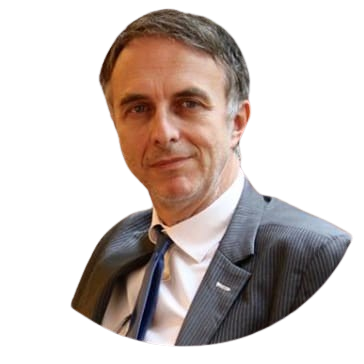
Prof. Dr. Marco Paret introduces the Methode Paret, demonstrating its unique approach to hypnotic practice in this video.
Prof. Dr. Marco Paret introduces the Methode Paret, demonstrating its unique approach to hypnotic practice in this video.
Prof. Dr. Marco Paret introduces the Methode Paret, demonstrating its unique approach to hypnotic practice in this video.
Prof. Dr. Marco Paret introduces the Methode Paret, demonstrating its unique approach to hypnotic practice in this video.
The proof that words do not explain
One might object that a dog or a newborn does not understand verbal suggestions. Yet they react. This is the proof that the phenomenon touches a level deeper than the psychological one. Prof. Dr. Paret states it plainly: «The fact that even animals can react, and that animals are not suggestible, means that we are touching a non-psychological level — deeper than psychology, which is natural.»
This sentence is the key to everything. It is not about convincing, persuading, or using words. It is about entering into contact with a biological, physiological dimension that precedes language. Animals do not understand words, yet they become quiet. Children who do not yet speak, yet they calm down. The level touched is deeper than psychology, and it is natural.
What does this mean in practice? It means that the phenomenon is accessible, observable, and does not require complex intellectual abilities. It means that calm can be induced, that contact can be established, that well-being can pass through channels other than those of words. And it means that this ability is innate in man, as the tradition of animal magnetism demonstrates.
Virgil and the hen
Prof. Dr. Paret recounts an anecdote that illuminates this truth. His master, Virgil, taught him hypnosis in a rural context, where these practices were considered natural. «Virgil told us that in the countryside hypnosis was considered natural, because very often animals enter particular states: it is easy to see animals that find themselves in something similar to hypnotic states.»
The scene is concrete: a farm, a chicken coop, a man observing. Virgil took a hen and looked into its eyes. «To induce them, each animal yields in a different way. A hen, for example, it is enough to observe it in the eye: we did it too once. Virgil, who taught me hypnosis, took a hen and taught us to hypnotize it.»
The anecdote continues with a fundamental detail: the technique is not universal. «But you can also work on a dog, with the eyes, or on small puppies with the magnetic passes. It is very interesting: each animal has its own technique.» This observation opens up a world. There are multiple hypnoses, each with its own modalities, sensory pathways, and adaptations to the nature of the one before us.
What are magnetic passes? They are one of these pathways. They are a gesture that is learned, repeated, felt. And that works even where words do not arrive.
What magnetic passes are
Magnetic passes are a movement of the hands that glide along the body, at a short distance, without touching. The rhythm is slow, the breath is deep, all attention is on the hands and on the sensation they convey. Physical contact is not needed: what is needed is presence, direction, intention.
What are magnetic passes? They are a gesture that can be done on a person, on a child, on a puppy. Prof. Dr. Paret explains it simply: «Small children can already be considered in hypnosis: everything is simpler. They also feel magnetic passes more easily, and everything that people can do — so sometimes things can be resolved very quickly.»
The sensation is that of a warmth that moves, of a light current, of a presence that accompanies. Small puppies feel them, and become quiet. Children feel them, and relax. The gesture is ancient, and the name derives from a tradition that considers it a passage of something real, albeit invisible.
This gesture does not replace medical care, but it opens a space of calm and contact. It is a tool that can be learned, used with respect and caution, and belongs to a living tradition, that of the contemporary Paret Method.
The examples of Völgyesi
The Hungarian researcher Ferenc Völgyesi gathered, in his studies, a series of examples showing how fascination is widespread in nature. Prof. Dr. Paret has indicated these examples as fundamental for understanding the phenomenon. Völgyesi’s book has various examples, and all show the same thing: immobility, staring, eye contact that blocks and attracts.
The snake and its prey: the ancients had observed how snakes can “charm” their victims. Small birds, geese, and even antelopes remain motionless in a state definable as “fascination rigidity,” and do not attempt to flee. The prey is as if suspended, waiting, in a time that has stopped.
The testimony of Prof. Dal Pozzo, cited in our books, is even more precise. It concerns a nightingale, and deserves to be reported in full.
The nightingale singing on the tree, the gaze meeting that of the animal on the ground, the song ceasing, the attempt to fly away failing, the descent from branch to branch until the final cry.
— Prof. Dal Pozzo, cited in the works of Prof. Dr. Paret
The scene is powerful: the song that stops, the wing that does not obey, the inevitable descent. It is not a metaphor: it is a physiological description. Fascination acts on muscle tone, on breathing, on immobility. The animal is as if captured by a gaze that is a threat and at the same time stronger than any flight, and this gaze holds it back.
The mongoose and the giant toad offer another example. The fascinating action can be countered: the mongoose attacks the hypnogenic zone of the venomous snake and wins. The attacked animal proves more “psychoactive” than the aggressor. Fascination is not a fatality: it is a relationship, and in the relationship there can be a way out.
The two lizards, during an outing, remain motionless for ten minutes staring at each other, until the larger one grabs the head of the other. Ten minutes of immobility, of tension, of gaze. And the swans, from Mesmerismus®, fixed, turn their long necks to continue staring at the operator. The neck that twists, the gaze that does not let go: fascination is stronger than posture.
Children
Small children can already be considered in hypnosis. Prof. Dr. Paret states it without hesitation: «Small children can already be considered in hypnosis: everything is simpler.» Their mind is not yet full of words, thoughts, filters. They are closer to that natural state which in adults is covered by layers of habit and language.
Children feel magnetic passes more easily. «They also feel magnetic passes more easily, and everything that people can do — so sometimes things can be resolved very quickly.» This quickness is a gift, but it also requires caution. Those who work with children must do so with respect, with delicacy, and always for their well-being.
Even children who do not yet speak benefit from these gestures. «Even children who do not yet speak benefit from magnetic passes: this is what our students report.» Words are not needed to receive the benefit of contact, calm, presence. The body listens, even when the ears do not understand.
Caution is essential. It is about accompanying, not curing. For any health problem, the pediatrician remains the reference. Working with children, as with animals, is a work of calm and well-being, never of coercion. With those who cannot give verbal consent, one works only for their good, with the utmost ethics and respect.
Why in children and animals emotion does not remain trapped
This is one of Prof. Dr. Paret’s most profound insights, and it is written in his book «History of Hypnotism, Animal Magnetism and Instant Healings». The quotation is verbatim, and must be read carefully: «When it comes to animals and children, emotion does not last long. In adults instead it tends to remain trapped inside and become a chronic state.»
What does this mean exactly? It means that in children and animals emotion flows, expresses itself, dissolves. A child cries, and then laughs. A dog is afraid, and then wags its tail. Emotion is a wave that passes, that leaves no deposits. In adults, instead, emotion is held back, brooded over, hidden. It becomes a chronic state, a habit of body and mind.
This difference explains why non-verbal hypnosis works so well with the youngest and with animals. There is no accumulation to dissolve, no story to reprocess. There is only entering into contact with a state that is already natural, already fluid, already available. The work is simpler, quicker, more direct.
This is a truth that few know, and it opens a new perspective. The child and the animal are not “difficult” to hypnotize: they are already in that state. One only needs to know how to see it, and how to accompany it. The parent who learns this, learns to be with their child in a deeper way.
The Liébeault case
The history of hypnosis offers a case that confirms this vision. The founder of the Nancy school, Liébeault, reported forty-five cases of results obtained by imposing both hands on small children. Of these, thirty-two were under three years of age, an age at which Liébeault considered suggestion excluded. The children could not understand words, yet something happened.
He reported forty-five cases of results obtained with the imposition of both hands on small children; thirty-two patients were under three years of age, and at that age he believed that suggestion could be excluded.
— from nineteenth-century clinical literature on hypnotism, historical collection of the Library
On Bernheim’s advice, Liébeault then replaced the hands with water declared magnetized to the parents. The results were equally good. Critics concluded that suggestion passed through the adults, through the parents who believed in the water. But this objection has a weak point, which Prof. Dr. Paret highlights clearly.
Our position is clear: that transmission chain is missing in animals, which react anyway. A dog does not know that the water is “magnetized,” has no expectations, no transmitted suggestions. Yet, as Völgyesi’s examples and Virgil’s experience demonstrate, animals enter states of fascination. Precisely for this reason the level touched is deeper than psychology.
The Liébeault case is a historical confirmation, not definitive proof. But together with the animal examples, it builds a coherent picture: there exists a communication channel that does not pass through words, that has no need of beliefs, and that acts directly on the body, on muscle tone, on breathing. This channel is animal magnetism.
What a parent can do
A parent can learn to use these tools for their child’s well-being. The evening gesture, before sleeping, is a concrete example. The hands descending slowly along the child’s body, a few centimeters away, with a calm rhythm and a deep breath. The child becomes quiet, sleep arrives more easily, the day closes in a silent contact.
Prof. Dr. Paret is clear on this point: «Much of the child depends on the parent: the parent who works on themselves and learns these techniques can then achieve great results.» The parent is not a technician, but is a presence. Their calm, their confidence, their ability to remain in contact, are the first medicine for the child.
This does not mean replacing the pediatrician. It means adding a tool of relationship, calm, presence. It means learning to use the hands, the gaze, the breath. It means rediscovering an ability that is innate, but often forgotten. The parent who learns, also learns to know their child better.
The quotation «much of the child depends on the parent» is an invitation to responsibility, not a burden. It is the awareness that one’s inner state is transmitted, that one’s calm is contagious, that one’s work on oneself is the first gift one can give to one’s child.
The original name: animal magnetism
The name we use today, magnetism, derives from an older and more precise tradition. «What we call magnetism was actually called animal magnetism: the original name. It is therefore clear that it is truly fitting, because we enter into an even more distinct contact.» Prof. Dr. Paret emphasizes this origin with pride, because the name already says everything.
Animal magnetism is not a metaphor. It is a description: an action exerted from one body to another, a contact that is not only physical, a communication that is not only verbal. And animals, in this, are masters. «Animals, among other things, also understand fascination: so with the gaze, simply, we can achieve very strong results.»
The gaze is the fundamental element. «Just think that for animal trainers the essential element is the gaze: the gaze is the fundamental element.» The trainer does not speak to the lion, does not explain, does not convince. He looks at it, and the lion responds. This is instantaneous fascination, the same that can be used with animals and children.
Prof. Dr. Paret has had several students who have worked with animals. «These techniques are very useful for those who want to work with animals: we have had several students who have worked with dogs, with horses, and with other types of animals. Those who work the most are those who work with horses.» Horses, sensitive and reactive animals, are a perfect testing ground for these techniques.
The tradition is alive in the contemporary Paret Method. The hands, the gaze, the magnetic passes: ancient tools, rediscovered and taught with rigor. And the quotation from Prof. Dr. Paret’s book confirms it: «I have become convinced of the strength and validity of these techniques seeing recently that they work equally well for healing animals: they are keys that allow us to touch the deepest layers of the human being.»
Frequently asked questions
1. Is non-verbal hypnosis a form of mind control?
No. Non-verbal hypnosis is a form of contact and communication. It is about accompanying, and no one is forced. With animals and children, who cannot give verbal consent, one works only for calm and well-being, never to coerce. Ethics is the foundation of this practice.
2. Can I use magnetic passes on my child to make him sleep?
Yes, the evening gesture is a typical example. The hands descending slowly along the body, at a short distance, with a calm rhythm, can help the child relax. It is important to use this gesture with delicacy and respect, and to remember that it does not replace medical care. For any health problem, the pediatrician is the reference.
3. Are animals truly sensitive to these techniques?
Yes, animals are very sensitive. Prof. Dr. Paret demonstrates this with Völgyesi’s examples and with the anecdote of Virgil and the hen. Animals are not suggestible, and this is the proof that the level touched is deeper than psychology. Each animal has its own technique: the gaze for some, magnetic passes for others.
4. Do I need a special gift to learn these techniques?
No, a special gift is not needed. What is needed is the will to learn, constant practice, and respect for the one before us. Prof. Dr. Paret teaches these techniques in his School, and many students have learned and applied them successfully. The ability is innate, but it must be awakened and cultivated with study and practice.
When words are not needed, contact remains.
Those who truly wish to learn these techniques find them in the live seminars of Prof. Dr. Paret — who teaches all over the world — where magnetic passes and fascination are practiced with one another, and where several students come precisely to work with horses and dogs. The courses are organized by the Université Européenne.
Notes and scientific references
- Völgyesi F. A., Menschen- und Tierhypnose, Orell Füssli, Zürich-Leipzig 1938 (English ed. Hypnosis of Man and Animals, Baillière, Tindall & Cassell, London 1966) — the systematic collection of observations on fascination immobility in various species, cited in the works of Prof. Dr. Paret.
- Gallup G. G., Tonic immobility: The role of fear and predation, «The Psychological Record», 27(S1), 1977, pp. 41-61. doi:10.1007/BF03394432 — tonic immobility in animals, the phenomenon that experimental research has studied starting from observations on the hen.
- Porges S. W., The polyvagal perspective, «Biological Psychology», 74(2), 2007, pp. 116-143. doi:10.1016/j.biopsycho.2006.06.009 — theoretical framework on states of immobility and connection regulated by the vagus; model discussed in the literature.
